Most indoor plants need between 6 to 8 hours of bright, indirect sunlight daily, but some thrive in lower light conditions, while others require more direct sun. Leafy greens often prefer moderate light, whereas flowering plants need more to bloom. To keep your plants healthy, observe their response and adjust light accordingly. If you want specific tips for different plants and how to optimize their lighting, you’ll find helpful guidance further along.
Key Takeaways
- Different indoor plants have specific light needs, ranging from low to bright indirect sunlight.
- Leafy greens generally thrive in moderate to bright indirect light, while flowering plants may require more direct light.
- Signs like yellowing leaves indicate insufficient light, while scorched leaves suggest too much direct sun.
- Adjust light placement and duration to match each plant’s requirements, typically 12-16 hours daily.
- Use grow lights with appropriate spectra (blue for foliage, red for flowering) for optimal indoor plant growth.
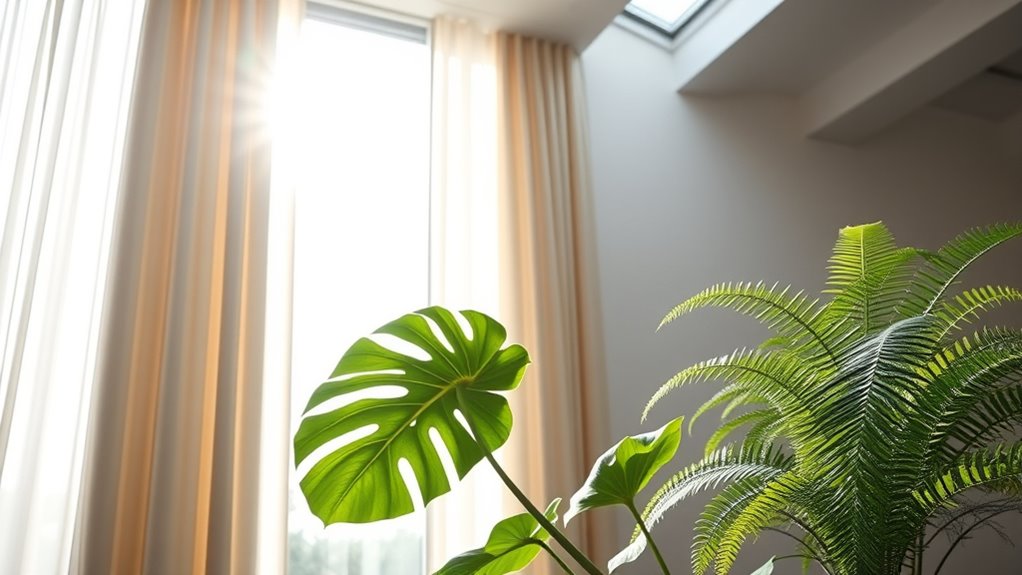
Have you ever wondered how to keep your indoor plants healthy and thriving? One key factor is providing the right amount of light, which can be tricky since natural sunlight varies throughout the day and year. To guarantee your plants grow strong, you might need to supplement with artificial light, especially during darker months or in rooms with limited windows. But not all artificial lights are created equal. The type of light you choose and the light spectrum it emits make a significant difference in your plants’ health.
When selecting artificial light, it’s essential to understand the light spectrum. Plants primarily use light in the blue and red wavelengths for photosynthesis. Blue light encourages lush, leafy growth, while red light promotes flowering and fruiting. A full-spectrum grow light mimics natural sunlight by providing a balanced range of wavelengths, making it ideal for most indoor plants. If you’re using specialized grow lights, check that they emit the correct spectrum to support your plants’ specific needs. For example, leafy greens benefit from blue-heavy spectrum, while flowering plants need more red light.
The intensity and duration of light are just as important as the spectrum. Different plants have varying light requirements; some thrive in bright, direct light, while others prefer low to moderate light conditions. To determine how much artificial light your plant needs, observe how it responds. If your plant’s leaves turn yellow or stretch toward the light, it’s not getting enough. Conversely, if leaves look scorched or bleached, it’s likely receiving too much light or heat. Adjust the distance and duration of your artificial light source accordingly. Understanding light intensity and duration can help optimize growth for each plant.
Positioning your light source correctly is vital. Keep grow lights close enough to provide sufficient intensity but not so close that they cause heat stress. Usually, placing the light about 12 to 24 inches above the plant works well for most setups. Use a timer to simulate natural daylight cycles, typically 12-16 hours of light per day for most indoor plants. This consistency helps your plants develop and maintain healthy growth patterns.
Frequently Asked Questions
Can Indoor Plants Survive in Artificial Light Alone?
Yes, indoor plants can survive in artificial light alone. By providing adequate artificial light, you support plant growth indoors effectively. Use grow lights that mimic natural sunlight, especially for plants that need bright, direct sun. Make sure to position the lights properly and keep them on for the right duration. With proper artificial light, your indoor plants will thrive and grow healthy even without natural sunlight.
How Do I Adjust Lighting for Seasonal Changes?
Think of your plant’s needs like a wardrobe changing with the seasons. During winter, you’ll want to adapt for less sunlight variation by moving plants closer to windows or using supplementary lighting. In summer, give them more natural light and maybe even some shade. Seasonal light adjustment ensures your plants thrive year-round, responding to the subtle shifts in sunlight variation so they stay healthy and vibrant.
What Are Signs of Too Much or Too Little Light?
If your plant shows signs of too much light, you’ll notice scorched or bleached leaves, and the foliage may look faded or crispy. Too little light causes leggy growth, pale leaves, and slow development. Pay attention to light intensity and duration; adjust by moving the plant to a brighter spot or providing shade. Proper lighting guarantees healthy growth, so observe your plant’s response and modify as needed.
Do All Plants Require Direct Sunlight?
Not all plants require direct sunlight; many thrive in indirect sunlight or shade. You should consider a plant’s shade tolerance to determine its light needs. For example, low-light plants like snake plants or pothos prefer indirect sunlight or even shade, while others demand more direct sun. Observing your plant’s response helps; if leaves yellow or scorch, it’s likely getting too much direct sun. Adjust placement accordingly for ideal growth.
How Long Should I Expose My Plants to Light Each Day?
Think of your plants like sunbathers soaking up rays. You should expose them to light for about 6-8 hours daily for ideal plant growth. The exact duration depends on the plant’s specific needs—some thrive with less, others need more. Consistent light exposure encourages healthy growth and vibrant leaves. Keep an eye on your plants; if they look pale or leggy, they might need more light.
Conclusion
Now that you know each plant’s sunlight needs, you can give them just the right amount of light to thrive. Did you know that over 70% of indoor plants suffer from inadequate lighting? Imagine your favorite plant flourishing with a simple adjustment—it’s like turning a dim room into a sunlit oasis. By understanding and meeting their sunlight requirements, you’ll enjoy lush, vibrant greenery that transforms your space into a natural haven.