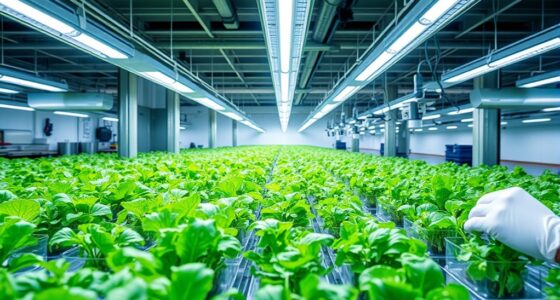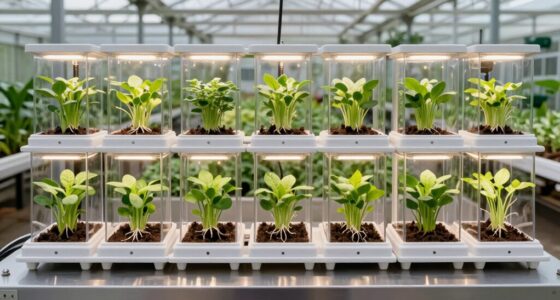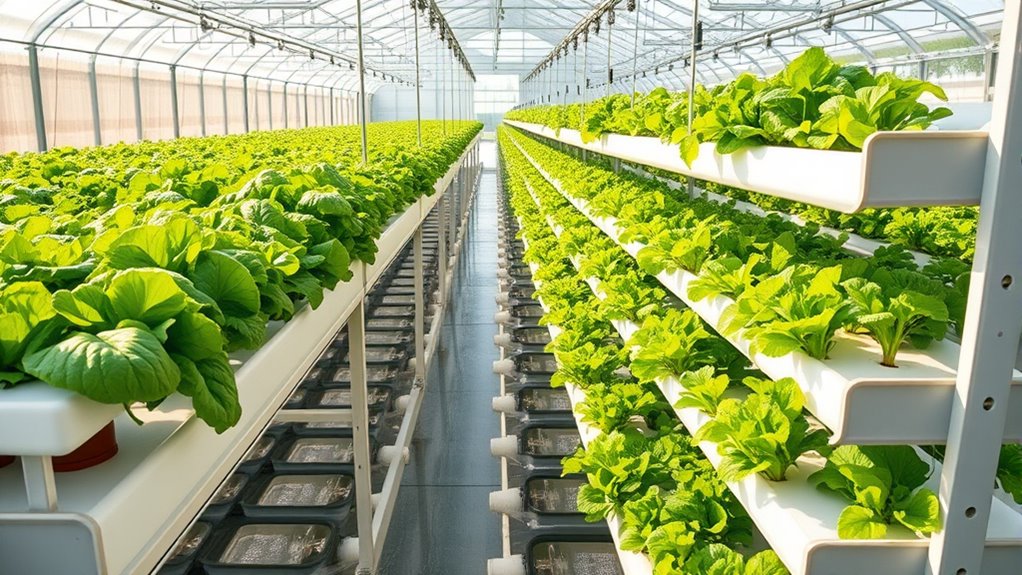

Scaling up your hydroponics system from home to a small commercial greenhouse involves adopting precise nutrient management and automation tools. Use sensors and automated dosing systems to maintain ideal nutrient levels and environmental conditions, reducing manual labor and errors. Investing in reliable equipment and establishing a steady supply chain helps guarantee consistent crop yields. By incorporating these strategies, you’ll improve crop quality and efficiency. Keep exploring these methods to access the full potential of your expanded hydroponic operation.
Key Takeaways
- Gradually increase system size while upgrading from manual to automated nutrient and environmental controls.
- Invest in scalable automation components like sensors, pumps, and controllers for reliable operation.
- Optimize nutrient management with real-time monitoring to ensure consistent crop growth at larger scales.
- Establish a dependable supply chain for nutrients, equipment, and maintenance to support expansion.
- Focus on cost-benefit analysis, long-term savings, and incremental implementation for sustainable growth.
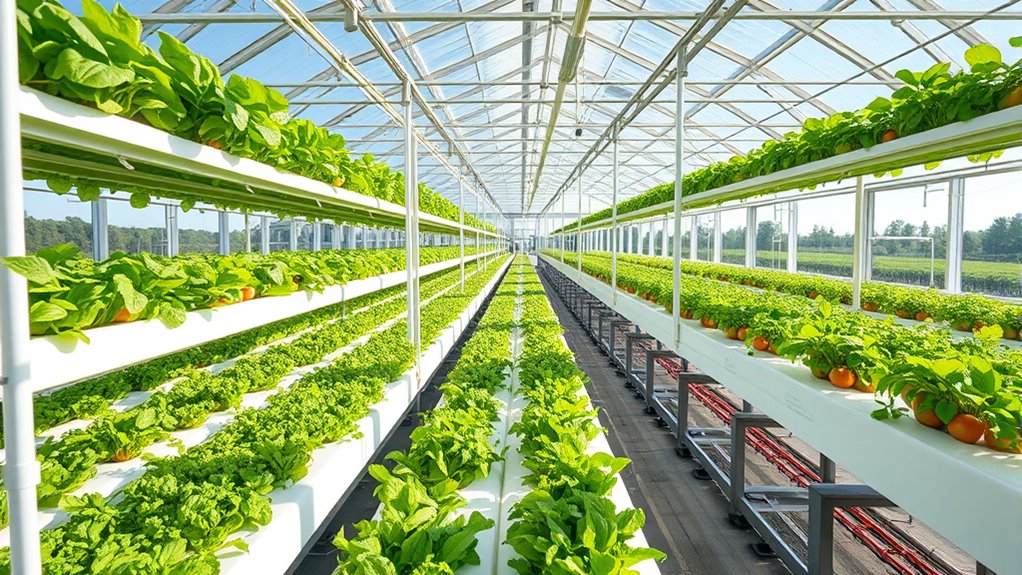
Scaling up hydroponics offers a promising solution to meet the growing demand for fresh produce without expanding land use. As you shift from a home setup to a small commercial greenhouse, you’ll need to refine your nutrient management strategies. In small systems, you might manually adjust nutrient solutions, but larger operations require more precise control. Implementing effective nutrient management ensures your plants receive the right balance of nutrients at each growth stage, boosting yields and quality. Automated systems can play a pivotal role here, allowing you to monitor and adjust nutrient levels in real-time. With sensors and automated dosing pumps, you can maintain consistent nutrient concentrations without constant manual intervention, saving time and reducing errors.
Scaling hydroponics enhances crop yield and quality through precise, automated nutrient management and real-time monitoring.
When scaling up, automation systems become essential for efficiency and consistency. These systems can automate tasks such as watering, nutrient delivery, climate control, and lighting. Using data from sensors, automation allows you to optimize conditions for your crops continuously. For example, if your sensors detect a drop in pH or electrical conductivity (EC), the system can automatically administer the necessary adjustments. This level of control minimizes nutrient imbalances and ensures your plants grow under ideal conditions, which is especially important when managing larger quantities of plants. Automation also helps you track data over time, providing insights that enable better decision-making and future planning.
As your operation grows, it’s critical to establish a reliable supply chain for nutrients and equipment. Investing in automation systems may require upfront costs, but the long-term savings in labor and increased productivity make it worthwhile. You’ll need to install reliable sensors, pumps, and controllers, and ensure they are calibrated correctly. Regular maintenance becomes essential to prevent malfunctions that could jeopardize your crop health. Additionally, integrating your automation with software platforms can centralize control and data analysis, making it easier to troubleshoot and optimize your system. Incorporating precision control techniques can further improve your system’s efficiency and crop outcomes.
Scaling up hydroponics isn’t just about increasing volume; it’s about creating a sustainable, efficient system that can be managed effectively. Proper nutrient management combined with advanced automation systems ensures consistent crop growth and maximizes your yields. While it may seem complex at first, taking incremental steps—starting with reliable sensors and automation tools—can streamline the transition from a small home setup to a thriving small commercial greenhouse. Ultimately, these investments will pay off by providing higher-quality produce, reduced labor, and greater control over your growing environment.
As an affiliate, we earn on qualifying purchases.
Frequently Asked Questions
What Are the Initial Costs for Small-Scale Hydroponic Systems?
When considering initial costs for small-scale hydroponic systems, you should conduct a thorough cost analysis to identify essential expenses. Equipment selection plays a key role, as you’ll need grow containers, pumps, lighting, and nutrients. Expect to spend a few hundred dollars for a basic setup, but costs can increase with advanced technology. Planning carefully helps you stay within budget and guarantees your system runs efficiently from the start.
How Do I Choose the Right Crops for Commercial Hydroponics?
You might worry about choosing the wrong crops, but focusing on market demand helps. Think about crop diversity—select a variety of high-yield, fast-growing plants like leafy greens, herbs, or strawberries. These are popular, easy to manage, and sell well. By analyzing local preferences and trends, you guarantee your crops meet customer needs, making your commercial hydroponics venture more profitable and sustainable from the start.
What Are Common Pest Issues in Large Hydroponic Setups?
In large hydroponic setups, pest issues like aphids, whiteflies, and spider mites are common. Effective pest control and disease management are essential to protect your crops. You should regularly inspect plants, maintain cleanliness, and use integrated pest management techniques. Biological controls, like beneficial insects, and proper sanitation help prevent infestations, ensuring healthy growth and minimizing crop loss. Staying vigilant keeps your hydroponic system thriving and pest-free.
How Do I Ensure Consistent Nutrient Delivery at Scale?
Think of your nutrient delivery like a finely tuned orchestra; every part must play in harmony. To guarantee consistent nutrient delivery, you need precise nutrient monitoring and reliable automation systems. Regularly check sensor readings, calibrate equipment, and automate feed schedules. This way, you keep your plants thriving without missing a beat, regardless of scale. Proper management turns your hydroponic system into a well-oiled machine, delivering nutrients exactly when and how your plants need them.
What Legal Regulations Apply to Commercial Hydroponic Farming?
You need to understand legal compliance and zoning regulations for commercial hydroponic farming. Check with local authorities to verify your farm meets zoning laws, land use requirements, and permits. You might also need to adhere to water usage regulations, food safety standards, and environmental rules. Staying informed about these legal aspects helps you avoid fines or shutdowns, ensuring your farm operates smoothly and legally at any scale.
automated hydroponic system sensors
As an affiliate, we earn on qualifying purchases.
As an affiliate, we earn on qualifying purchases.
Conclusion
As you expand your hydroponic setup, you’re on the brink of opening incredible growth potential. With each step up, new challenges and opportunities arise—are you ready to tackle them? The journey from home to commercial scale is filled with surprises that could transform your entire operation. Stay prepared, stay curious, and keep pushing forward. The next big breakthrough could be just around the corner—are you ready to discover what’s next?
small commercial greenhouse automation kit
As an affiliate, we earn on qualifying purchases.
As an affiliate, we earn on qualifying purchases.

VIVOSUN E42A+ GrowHub Environmental Controller for Grow, Smart APP Control
- Device Unification: Operate devices individually or together
- Environmental Monitoring: Built-in temperature, humidity sensors, and probe
- Automated Growth Control: Schedule lighting, fans, and airflow automatically
As an affiliate, we earn on qualifying purchases.
As an affiliate, we earn on qualifying purchases.