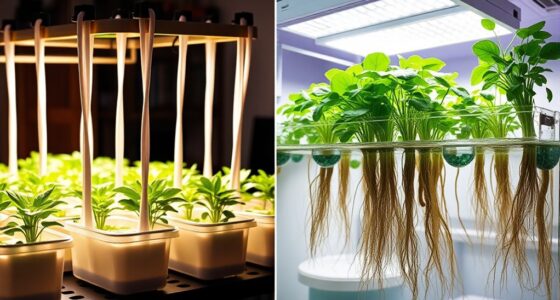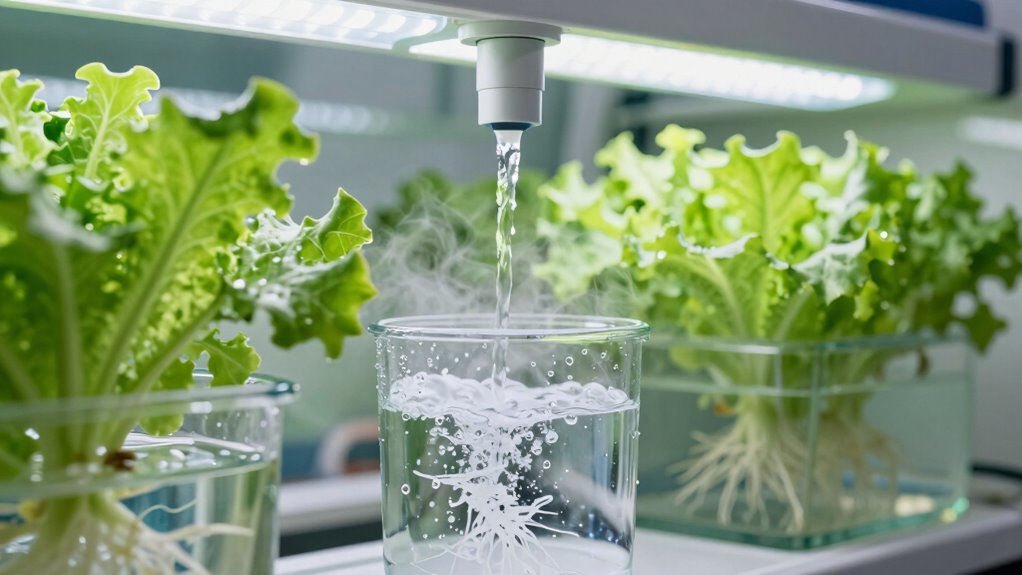

Using reverse osmosis in hydroponics removes impurities like chlorine, heavy metals, and dissolved solids, giving you cleaner water for healthier plants. It helps control water quality and makes nutrient balancing easier, as nearly mineral-free water allows precise formulation of nutrient mixes. RO also stabilizes pH levels, reducing fluctuations that can stress plants. Since most minerals are removed, you’ll need to supplement trace elements, but managing this process keeps your crop growth steady and healthy. Keep exploring to discover more ways RO improves your system.

Get the little things that make your day delivered free with Prime
- Fast, free delivery on millions of items
- Prime Video, Amazon Music and more included
- Member-only deals all year
Key Takeaways
- Reverse osmosis removes impurities, contaminants, and unwanted minerals, providing cleaner water for precise hydroponic nutrient formulation.
- It stabilizes water pH, reducing fluctuations and simplifying pH management for optimal plant nutrient uptake.
- RO water’s minimal mineral content requires regular supplementation of trace elements and minerals for healthy plant growth.
- It enables tailored nutrient ratios by eliminating interfering minerals, improving nutrient availability and absorption.
- Regular water testing is essential to monitor residual impurities and maintain consistent water quality in hydroponic systems.
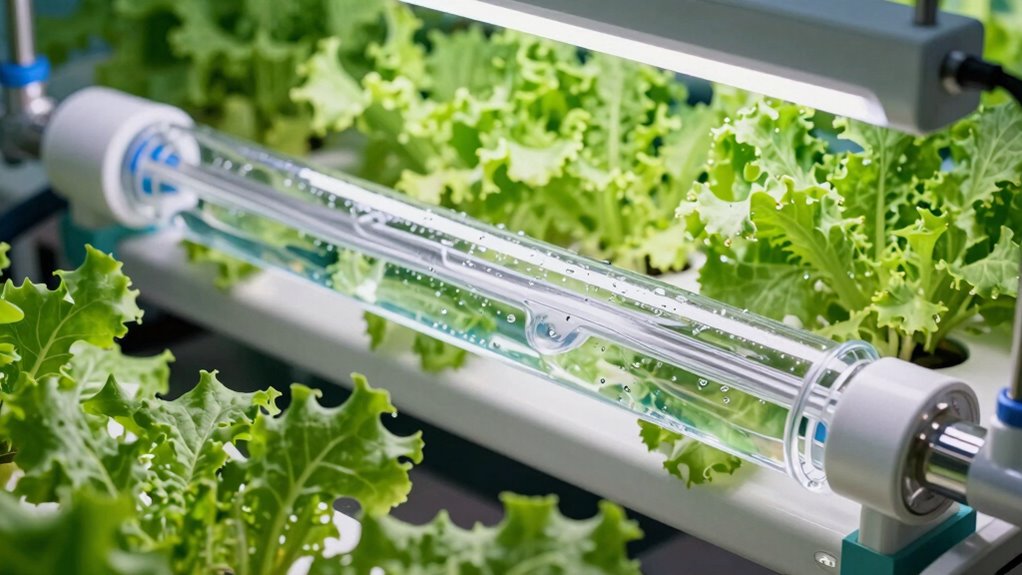
Reverse osmosis (RO) has become an indispensable tool in hydroponic water management because it effectively removes impurities and contaminants from water sources. When you use RO, you gain control over the quality of water entering your system, which is vital for healthy plant growth. Impurities like chlorine, heavy metals, and dissolved solids can interfere with nutrient uptake, leading to inconsistent growth and lower yields. By eliminating these contaminants, RO helps create a cleaner baseline from which you can precisely manage your nutrient solution.
RO removes impurities, ensuring cleaner water for healthier, more consistent hydroponic plant growth.
One of the biggest benefits of using RO in hydroponics is its impact on nutrient balancing. Since RO water is nearly free of minerals and salts, it provides a blank slate for you to add specific nutrients tailored to your plants’ needs. Without the interference of unwanted minerals, you can formulate nutrient mixes with greater accuracy, ensuring plants receive the right ratios of nitrogen, phosphorus, potassium, and trace elements. This precise nutrient balancing enhances plant health, improves growth rates, and boosts overall crop quality.
Alongside nutrient management, pH stability is another vital factor in hydroponic success. RO water tends to have a neutral or slightly acidic pH, which allows you to control pH levels more easily. Since contaminants that might cause pH fluctuations are removed, maintaining a stable pH becomes less difficult. Consistent pH levels are essential because they influence nutrient availability; if the pH swings too much, plants can struggle to absorb essential nutrients, leading to deficiencies or toxicities. With RO water, you have a more predictable starting point, enabling you to adjust pH with precision and keep it within ideal ranges for your specific crops.
Additionally, understanding water quality testing and regularly monitoring your water parameters is crucial when using RO in hydroponic systems. Because RO strips water of most minerals, you’ll need to supplement your nutrient solution with necessary trace elements and minerals to prevent deficiencies. This process guarantees your plants get all they need for healthy growth without the unpredictability that comes with untreated, mineral-rich water sources. Additionally, regularly monitoring and adjusting pH levels in RO water helps you maintain a stable environment, reducing stress on your plants and promoting steady development.
reverse osmosis water filter for hydroponics
As an affiliate, we earn on qualifying purchases.
As an affiliate, we earn on qualifying purchases.
Frequently Asked Questions
How Often Should I Replace the Reverse Osmosis Membrane?
You should replace the reverse osmosis membrane every 2 to 3 years, depending on your membrane’s lifespan and your water quality. Regularly monitor your system’s performance, and if you notice a decline in water quality or flow rate, it’s time for a replacement. Proper maintenance and timely replacements guarantee your hydroponic system gets clean, pure water, preventing mineral buildup and protecting your plants’ health.
Does Reverse Osmosis Remove Beneficial Minerals From Nutrient Solutions?
Yes, reverse osmosis removes beneficial minerals from nutrient solutions, impacting mineral retention. While it markedly improves water purity by eliminating contaminants and unwanted substances, it also strips away essential minerals like calcium and magnesium. To maintain proper mineral balance in your hydroponic system, you might need to supplement these nutrients after filtration. This ensures your plants receive the necessary minerals for healthy growth while benefiting from the high water purity that reverse osmosis provides.
Can Reverse Osmosis Units Handle High TDS Levels Effectively?
Yes, reverse osmosis units can handle high TDS levels effectively, but you need to monitor water pH and nutrient balance carefully. When TDS is high, the system removes dissolved salts and impurities, which can shift pH and affect nutrient uptake. Regularly testing your water guarantees ideal conditions. You might also need to reintroduce beneficial minerals to maintain a balanced nutrient solution, ensuring your plants stay healthy and productive.
What Maintenance Is Required for an RO System in Hydroponics?
To maintain filtration efficiency and guarantee system longevity, you should regularly replace pre-filters every 6-12 months and post-filters annually. Check and clean the membrane as needed, especially if you notice a decline in water quality or flow rate. Keep an eye on pressure gauges and replace filters promptly. Proper maintenance prevents buildup, extends your system’s lifespan, and keeps your hydroponic water consistently clean and safe for plants.
How Does RO Affect pH Stability in Hydroponic Systems?
Using reverse osmosis improves pH stability in your hydroponic system by removing impurities that cause fluctuations. This creates a more consistent aquaponic balance, making nutrient absorption more predictable for your plants. With fewer contaminants, your system maintains a stable pH level, reducing stress on your plants. Ultimately, RO helps you achieve ideal growth, healthier crops, and more efficient nutrient uptake by ensuring your water stays balanced and clean.
As an affiliate, we earn on qualifying purchases.
Conclusion
By harnessing reverse osmosis, you transform your hydroponic water—stripping away impurities and balancing minerals—much like a painter refines a blank canvas. It’s a stark contrast to untreated water, which can introduce chaos into your system. Embracing this technology not only enhances plant health but also simplifies your management, making your grow space a sanctuary of control amid nature’s unpredictability. In this delicate dance, reverse osmosis becomes your secret weapon for thriving hydroponic gardens.
As an affiliate, we earn on qualifying purchases.
trace element supplement for hydroponics
As an affiliate, we earn on qualifying purchases.
As an affiliate, we earn on qualifying purchases.
Halloween Picks
halloween
As an affiliate, we earn on qualifying purchases.