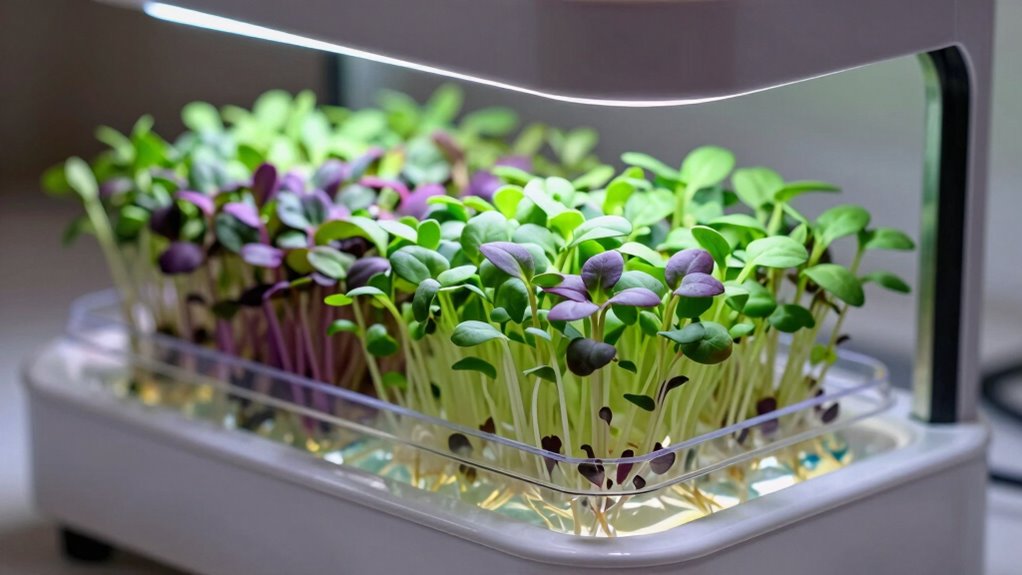
Microgreens fit perfectly into compact hydroponic setups because they grow quickly with focused nutrient delivery and proper lighting. You supply essential macronutrients and trace minerals directly through water, and manage light cycles with LED panels to encourage vibrant, flavorful plants. By adjusting nutrient concentration and optimizing light, your microgreens flourish even in tight spaces. If you want to turn small areas into high-yield microgreen gardens, mastering these essentials will help you succeed.
Key Takeaways
- Microgreens thrive in small hydroponic systems due to their short growth cycle and minimal space requirements.
- Nutrient solutions can be easily tailored and monitored in compact setups to optimize microgreen health.
- Proper lighting, such as LED panels with timers, ensures consistent growth and vibrant coloration in limited space.
- Managing nutrient concentration and light cycles prevents issues like root burn and legginess in microgreens.
- Combining precise nutrient delivery and controlled lighting maximizes growth, flavor, and nutritional quality in small hydroponic systems.
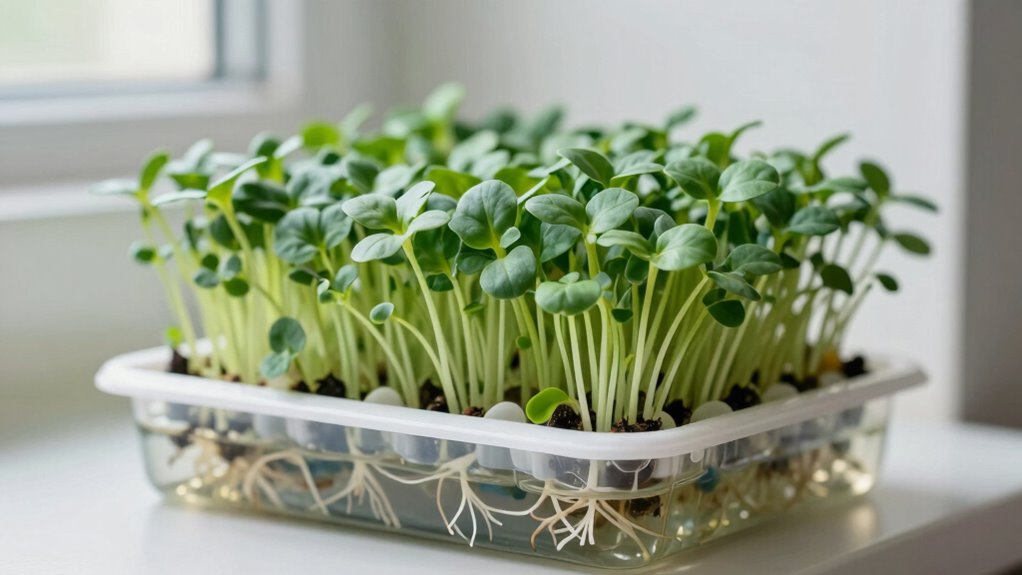
Microgreens have become a popular choice for home gardeners and commercial growers alike, especially when grown in hydroponic setups. Their quick growth cycle and high nutritional value make them ideal for compact systems where space is limited. When you’re cultivating microgreens hydroponically, understanding how to optimize nutrient solutions and light management is *crucial* for healthy, vibrant plants.
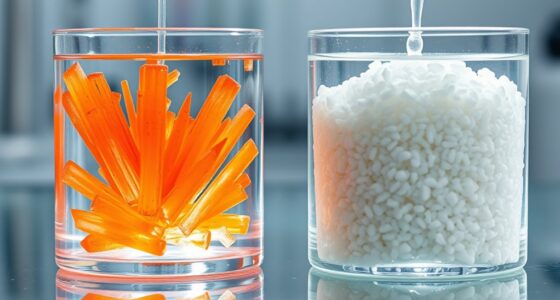
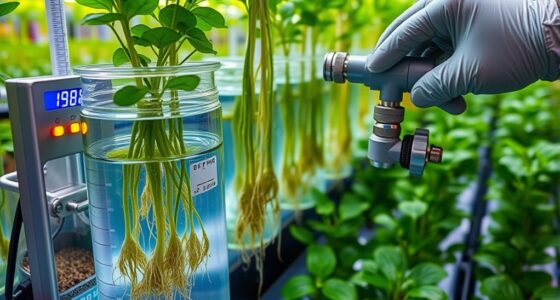
In a small hydroponic setup, nutrient solutions are the foundation of successful growth. Unlike soil-based gardening, hydroponics delivers nutrients directly to the roots via water. You need to *guarantee* your nutrient solution contains the right balance of macronutrients—nitrogen, phosphorus, and potassium—as well as trace minerals. Since microgreens have a short growth cycle, *it’s vital* to provide a nutrient-rich solution from the start but avoid overfeeding, which can cause root burn or encourage algae growth. Regularly monitoring pH levels, ideally between 5.5 and 6.5, helps your microgreens absorb nutrients efficiently. You might need to adjust the solution’s concentration as your microgreens develop, especially during the early sprouting stage when they are most sensitive. Using pre-made microgreen-specific nutrient solutions can simplify this process, *making sure* consistent results are achieved without guesswork.
Light management plays an equally *important* role in compact hydroponic setups. Microgreens require plenty of light to develop flavor, color, and nutritional content. In small spaces, you’ll want to position grow lights—such as LED panels—close enough to provide adequate intensity without causing heat stress. Most microgreens thrive under 12 to 16 hours of light daily, mimicking natural sunlight. Keep in mind that light quality matters; full-spectrum LEDs are preferred because they promote healthy growth and vibrant coloration. Additionally, maintaining a consistent light cycle helps your microgreens develop uniformly. If your setup lacks natural sunlight, investing in a timer for your grow lights *guarantees* you don’t forget to turn them on or off, which can disrupt growth patterns. Proper light management also involves adjusting the height of your lights as your microgreens grow, preventing them from stretching or becoming leggy.
Together, nutrient solutions and light management form the backbone of a successful compact hydroponic microgreen system. They work hand-in-hand to promote vigorous growth, rich flavor, and vivid color. By paying close attention to these aspects, you make the most of limited space and maximize your microgreens’ potential. Whether you’re growing on a kitchen countertop or in a small commercial setup, fine-tuning your nutrient delivery and lighting *is key* to ensuring you get healthy, delicious microgreens in record time.
microgreens hydroponic kit
As an affiliate, we earn on qualifying purchases.
As an affiliate, we earn on qualifying purchases.
Frequently Asked Questions
What Are the Best Microgreen Varieties for Small Hydroponic Systems?
You should try basil, radish, or sunflower microgreens for small hydroponic systems. They’re easy to grow and offer diverse flavor profiles, from spicy to sweet, enhancing your dishes. Plus, their microgreen nutritional benefits boost your diet with vitamins and antioxidants. These varieties thrive in compact setups, making them perfect for limited space. You’ll enjoy fresh, flavorful microgreens with added health benefits right from your own hydroponic garden.
How Much Space Is Needed for a Microgreen Hydroponic Setup?
You need just a small space—about a square foot or two—to start your microgreen hydroponic setup. But don’t underestimate the importance of proper lighting requirements and nutrient solutions; these are essential for healthy growth. As you expand, you’ll realize that efficient use of vertical space can maximize your yield. With a compact setup, you can enjoy fresh microgreens year-round, transforming even the tiniest corner into a thriving green oasis.
Can Microgreens Be Grown Year-Round Indoors?
Yes, you can grow microgreens indoors year-round, especially with greenhouse integration. By controlling light, temperature, and humidity, you create ideal conditions regardless of seasonal changes. This setup lets you enjoy fresh microgreens any time, even during winter. Keep in mind seasonal considerations like adjusting lighting during shorter days and maintaining consistent warmth. With proper management, your indoor microgreen garden flourishes, providing fresh greens all year long.
What Are Common Pests and How to Prevent Them?
You’ll want to identify common pests like aphids, fungus gnats, and spider mites through pest identification. To prevent infestations, keep your growing environment clean, monitor plants regularly, and guarantee proper airflow. Use organic pest control methods such as neem oil or insecticidal soap to manage pests safely. Staying vigilant and maintaining hygiene helps protect your microgreens from damage, ensuring healthy, vibrant growth in your compact hydroponic setup.
How Do I Harvest Microgreens From a Hydroponic System?
Did you know microgreens can be harvested in just 7-14 days? To harvest, simply use clean scissors to snip the microgreens above the soil or water line. Make sure your nutrient solutions are balanced and your lighting requirements are met to encourage healthy growth. Harvest in the morning when moisture levels are high, and always handle with care to prevent damage. Enjoy fresh microgreens in salads or garnishes!
LED grow lights for microgreens
As an affiliate, we earn on qualifying purchases.
As an affiliate, we earn on qualifying purchases.
Conclusion
Incorporating microgreens into your compact hydroponic setup is like planting a tiny forest of flavor and nutrition right at your fingertips. As you nurture these delicate greens, you’ll find them thriving in small spaces, turning your setup into a lively, edible garden. With minimal effort and maximum impact, microgreens become the jewel of your hydroponic world, proving that even the smallest plants can make the biggest difference. So, go ahead—watch your green world grow!
microgreen nutrient solution
As an affiliate, we earn on qualifying purchases.
As an affiliate, we earn on qualifying purchases.
compact hydroponic system
As an affiliate, we earn on qualifying purchases.
As an affiliate, we earn on qualifying purchases.