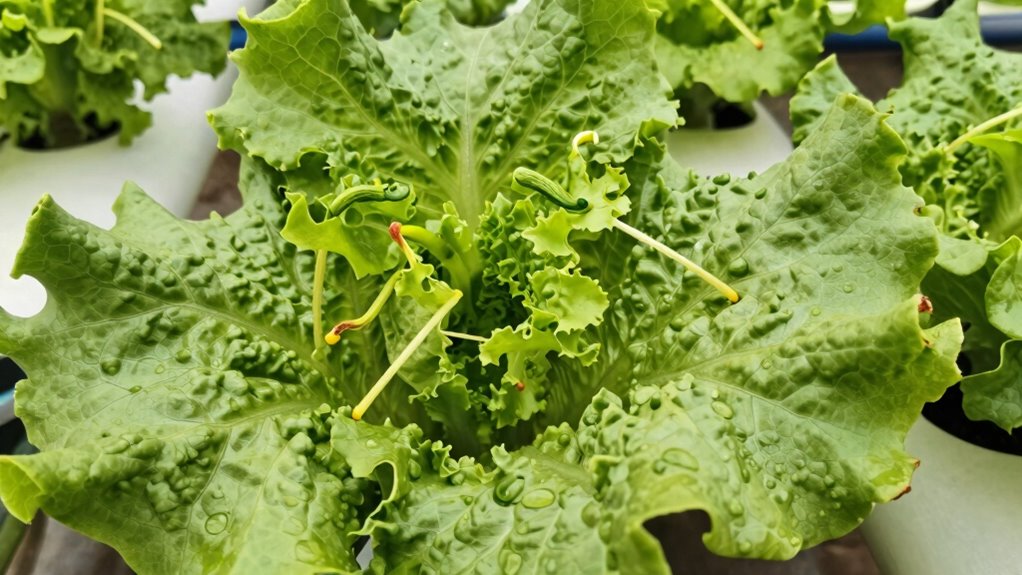

Hydroponic lettuce bolts under stress because it perceives environmental issues like nutrient imbalances, excessive light, or temperature fluctuations as threats. When your plants lack essential nutrients or face too much light or unstable conditions, they react by flowering early to survive. Overwatering or inconsistent watering can also trigger bolting. To keep your lettuce lush and productive, it’s important you manage these factors carefully—more tips below will help you prevent premature flowering.

Get the little things that make your day delivered free with Prime
- Fast, free delivery on millions of items
- Prime Video, Amazon Music and more included
- Member-only deals all year
Key Takeaways
- Stress from nutrient imbalances or deficiencies triggers early flowering as a survival mechanism.
- Excessive light intensity signals environmental stress, prompting the plant to bolt.
- Temperature fluctuations and inconsistent watering increase stress, leading to premature flowering.
- High levels of phosphorus or potassium can mislead lettuce to bolt.
- Maintaining stable environmental conditions reduces stress-induced bolting.
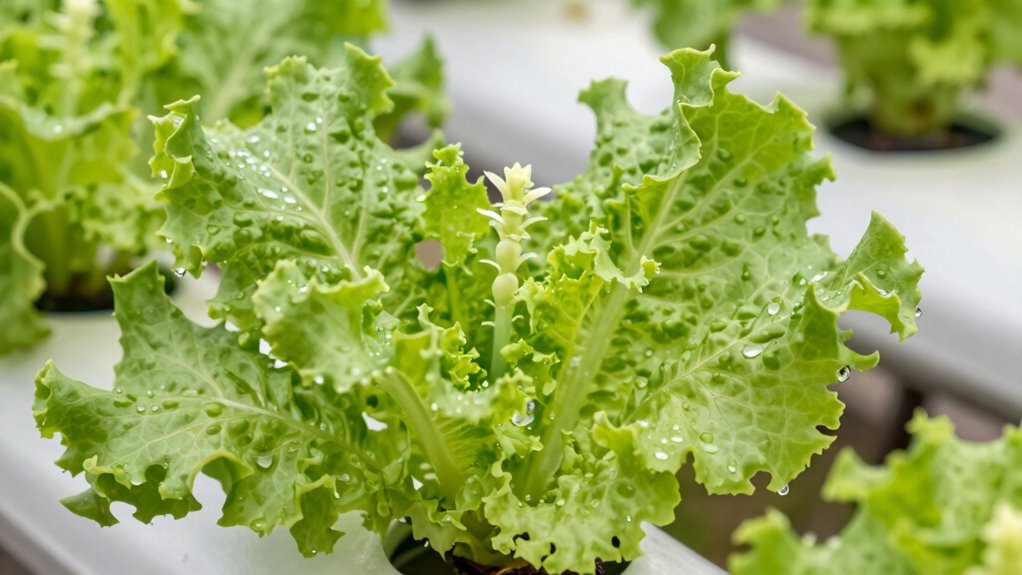
When hydroponic lettuce experiences stress, it often responds by bolting, signaling that it’s ready to flower and produce seeds prematurely. This is a natural survival response, but it can be frustrating if you’re aiming for tender, leafy greens. Two common causes of bolting are nutrient imbalance and light intensity. Understanding how these factors influence your lettuce can help you prevent early flowering and maintain ideal growth.
Stress triggers hydroponic lettuce to bolt, often due to nutrient imbalance or excessive light, leading to premature flowering.
Nutrient imbalance is a primary trigger for bolting. If your nutrient solution lacks essential elements like nitrogen, or if there’s an excess of certain minerals such as phosphorus or potassium, your lettuce can interpret this as environmental stress. This miscommunication prompts the plant to accelerate its reproductive cycle. To avoid this, you need to carefully monitor and adjust your nutrient solution. Providing a balanced mix with the right ratio of macronutrients ensures that your lettuce receives what it needs for healthy, prolonged leaf development. Regular testing and adjusting your nutrient levels can prevent deficiencies or toxicities, reducing the risk of bolting caused by nutrient stress.
Light intensity also plays a significant role in bolting. If your lettuce is exposed to overly intense light, especially direct sunlight or high-intensity grow lights, it perceives the environment as stressful. This perception triggers a hormonal response that initiates flowering. Conversely, insufficient light can weaken the plant, but excessive light is often the more immediate cause of bolting. To manage this, ensure your grow lights are at the appropriate distance and intensity for lettuce. Using adjustable lighting systems allows you to fine-tune light levels, preventing the plant from experiencing shock or stress that leads to early flowering. Additionally, maintaining a consistent light schedule helps your lettuce understand its environment, reducing the likelihood of stress-induced bolting.
Other factors, such as temperature fluctuations and inconsistent watering, can compound stress and increase bolting risk. But focusing on maintaining a balanced nutrient supply and ideal light conditions offers a proactive approach. Keep a close eye on your system’s parameters, and you’ll create a stable environment that discourages premature flowering. Proper environmental control ensures your plants remain healthy and productive. When your lettuce feels secure and well-nourished, it’s more likely to produce tender leaves rather than rushing into reproduction. By managing these key elements, you can extend your harvest window, enjoy lush greens longer, and keep your hydroponic setup thriving.
Products Worth Considering

Orbit B-hyve XD 4-Port Smart Hose Watering Timer with Wi-Fi Hub

Husqvarna 120 Mark III 16-Inch Gas Chainsaw, 38 cc

Greenworks 48V Cordless 3-in-1 Leaf Blower, Vacuum and Mulcher with Two 6.0Ah Batteries
As an affiliate, we earn on qualifying purchases.
Frequently Asked Questions
Can Hydroponic Lettuce Recover After Bolting?
Hydroponic lettuce can recover after bolting if you address stress indicators promptly. Focus on providing ideal conditions, like proper temperature and nutrient levels, to support its recovery. While genetic resistance varies among varieties, reducing stress helps prevent further bolting. Keep monitoring your plants closely, and if stress is managed early, your lettuce may recover and continue growing, although it might not produce as tender leaves as before.
What Are the Best Ways to Prevent Lettuce From Bolting?
Imagine lush, vibrant lettuce leaves reaching for the sky—preventing bolting keeps your greens tender and flavorful. You can do this by managing nutrients carefully, ensuring your plants aren’t stressed from deficiencies or excesses. Also, regulate light exposure—avoid sudden changes or overly long daylight hours—that triggers premature flowering. Consistent nutrient management and controlled light conditions help keep your hydroponic lettuce tender and harvest-ready, without rushing into bolting.
Does Bolting Affect the Taste of Hydroponic Lettuce?
Yes, bolting can affect the taste of hydroponic lettuce. When lettuce bolts, it often develops a bitter or woody flavor, leading to flavor alteration that many find less appealing. It can also impact nutritional value, as some nutrients diminish during the flowering process. To keep your lettuce tasting fresh and nutritious, you should harvest before bolting occurs, ensuring the best flavor and ideal nutrient content.
How Quickly Does Lettuce Bolt Under Stress?
Like a firecracker, lettuce can bolt rapidly under stress, sometimes within just a week. Genetic traits influence how quickly it bolts, but environmental triggers like heat, long daylight hours, or nutrient deficiencies accelerate the process. When these stressors hit, your lettuce responds swiftly, signaling it’s time to flower and produce seeds. To prevent this, keep conditions stable and match your lettuce’s genetic traits to the environment.
Are There Specific Lettuce Varieties Less Prone to Bolting?
Some lettuce varieties are less prone to bolting because of their genetics and varietal resilience. For example, leaf lettuces like Romaine or Butterhead tend to bolt later than crisphead types under stress. You should choose varieties with known resilience to temperature fluctuations and stress conditions. By selecting these, you’ll reduce the chances of premature bolting, ensuring your hydroponic lettuce stays tender and flavorful longer.
Conclusion
So, next time your hydroponic lettuce starts to bolt, remember—you’re closer than ever to uncovering what’s really causing it. The stress, the environment, the unseen factors—all hold secrets that could change your entire approach. Will you catch the warning signs early, or will you face the disappointment of lost crops? The choice is yours. Stay vigilant, stay curious—your next breakthrough is just around the corner, waiting to be discovered.