
The best smart home device for most people is the TP-Link Tapo P125M Matter Smart Plug, thanks to its compact design, Matter support, and reliable app experience. If you want a voice-first starting point, the Amazon Echo Dot (5th Gen) doubles as an Alexa control hub for the price of a small accessory, while the Amazon Echo Show 11 is the strongest all-in-one command center with a built-in smart home hub and a Full-HD touchscreen. The main tradeoff in this category is between cheap Wi-Fi plugs that do one job well and hub-style devices that tie everything together but cost more per unit. Ecosystem lock-in is another real decision: Alexa, Google Home, and Matter devices don’t all play equally nicely together. Keep reading for the full breakdown of all 15 devices and which one fits your setup.

Get the little things that make your day delivered free with Prime
- Fast, free delivery on millions of items
- Prime Video, Amazon Music and more included
- Member-only deals all year
Key Takeaways
- Matter support is the clearest dividing line in this lineup: the Tapo P125M, Linkind plug, and Tapo S505 switch future-proof your setup, while budget plugs like the Govee and GHome rely on older app-based integrations that can break when ecosystems update.
- Smart plugs dominated the list (8 of 15 products), and the comparison showed reliability and app quality — not raw specs — separate the Kasa and Tapo units from nearly identical-looking budget competitors like EIGHTREE and Amazon Basics.
- The Echo Show 11 is the only device here that serves as a true smart home hub, which changes the math: it can replace a separate hub, a speaker, and a display, justifying its premium over the Echo Show 5 for households with growing device counts.
- The Kasa HS200 switch and Tapo S505 offer a permanent, cleaner alternative to plugs for lighting — but both require wiring comfort and, in the Kasa’s case, a neutral wire, which older homes may lack.
- Two devices break the plug-and-speaker pattern: the Amazon Smart Air Quality Monitor and the Orbitell video doorbell add sensing and security, and both work best as additions to an established ecosystem rather than first purchases.
| TP-Link Tapo P125M Matter Smart Plug Mini (3-Pack) |  | Best Overall Smart Plug | Model: Tapo P125M | Max Load: 15A / 1800W | Connectivity: 2.4GHz Wi-Fi, Bluetooth onboarding | VIEW LATEST PRICE | See Our Full Breakdown |
| Govee Smart Plug, 4-Pack |  | Best Budget Multi-Pack | Pack Size: 4 plugs | Connectivity: Bluetooth and 2.4GHz Wi-Fi | Voice Assistants: Amazon Alexa, Google Assistant | VIEW LATEST PRICE | See Our Full Breakdown |
| Amazon Echo Dot (5th Gen) Smart Speaker, Deep Sea Blue |  | Best Smart Home Entry Point | Generation: 5th Gen | Dimensions: 3.9 × 3.9 × 3.5 in | Speaker: 1.6-inch full-range, mono | VIEW LATEST PRICE | See Our Full Breakdown |
| Kasa Smart Plug HS103P4, 4-Pack |  | Best Plug-and-Play Reliability | Model: HS103P4 | Operating Voltage: 120V AC | Wattage: 1800W | VIEW LATEST PRICE | See Our Full Breakdown |
| Linkind Matter Smart Plug | 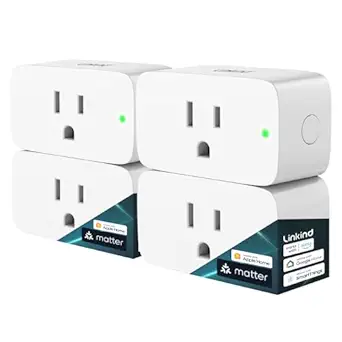 | Best Value Matter Pick | Power Capacity: 1800W, 15A | Connectivity: 2.4GHz Wi-Fi, IPv6, Matter | Compatibility: Apple Home, Alexa, Google Home, SmartThings, AiDot | VIEW LATEST PRICE | See Our Full Breakdown |
| Amazon Basics Smart Plug, Works with Alexa, 4-Pack, White |  | Best Value Starter Set | Connectivity: 2.4 GHz Wi-Fi | Compatibility: Alexa only | Quantity: 4-pack | VIEW LATEST PRICE | See Our Full Breakdown |
| Amazon Echo Show 5 Smart Display, Cloud Blue |  | Best Compact Smart Display | Display: 5.5 inches | Camera: 2 MP | Smart Assistant: Alexa | VIEW LATEST PRICE | See Our Full Breakdown |
| TP-Link Tapo S505 Matter Smart Light Switch, 2-Pack | 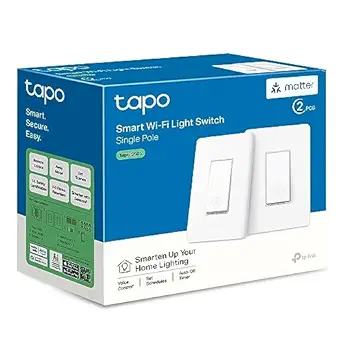 | Best for Multi-Ecosystem Homes | Model: Tapo S505 | Pack Size: 2 switches | Compatibility: Apple Home, Amazon Alexa, Google Home, Samsung SmartThings | VIEW LATEST PRICE | See Our Full Breakdown |
| Kasa Smart Light Switch HS200, Single Pole, Requires Neutral Wire |  | Best Proven Workhorse Switch | Model: HS200 | Switch Type: Single pole | Wiring: Neutral wire required | VIEW LATEST PRICE | See Our Full Breakdown |
| Amazon Smart Plug with Alexa |  | Best Single-Plug Alexa Pick | Dimensions: 3.2 × 1.5 × 2.2 in (80 × 38 × 57 mm) | Weight: 3.1 oz (87 g) | Input: 120 VAC, 60 Hz, 15 A max | VIEW LATEST PRICE | See Our Full Breakdown |
| EIGHTREE Wi-Fi Smart Plug, 15A, 4-Pack |  | Best Bulk Value for Small Appliances | Quantity: 4 plugs | Operating voltage: 120 V | Max wattage: 1800 W | VIEW LATEST PRICE | See Our Full Breakdown |
| Amazon Echo Show 11 (Newest Model), Smart Display with Alexa, Full-HD 11″ Touchscreen, Smart Home Hub, Graphite |  | Best Smart Home Command Center | Display: 11″ Full-HD touchscreen | Processor: AZ3 Pro chip | Smart home hub: Built-in | VIEW LATEST PRICE | See Our Full Breakdown |
| Amazon Smart Air Quality Monitor |  | Best for Invisible Home Health | Detected factors: PM2.5, VOCs, carbon monoxide, humidity, temperature | Connectivity: Works with Alexa | Alerts: Phone notifications and Echo announcements | VIEW LATEST PRICE | See Our Full Breakdown |
| GHome Wi-Fi Smart Plug with Alexa and Google Assistant Compatibility | 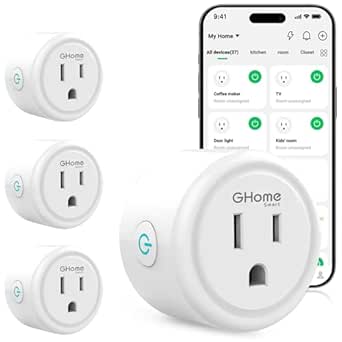 | Best for Shared Household Control | Connectivity: 2.4 GHz Wi-Fi or Bluetooth | Voice assistants: Amazon Alexa, Google Assistant | Compatible apps: GHome, Smart Life, Tuya | VIEW LATEST PRICE | See Our Full Breakdown |
| Orbitell 1080p Wireless Wi-Fi Video Doorbell Camera |  | Best Entry-Level Front Door Security | Resolution: 1080p | Connectivity: 2.4 GHz Wi-Fi only | Audio: Two-way audio | VIEW LATEST PRICE | See Our Full Breakdown |
| smart home device | Connectivity |
|---|---|
| TP-Link Tapo P125M Matter Smar | 2.4GHz Wi-Fi, Bluetooth onboarding |
| Govee Smart Plug | Bluetooth and 2.4GHz Wi-Fi |
| Amazon Echo Dot | — |
| Kasa Smart Plug HS103P4 | Wi-Fi (2.4GHz required) |
| Linkind Matter Smart Plug | 2.4GHz Wi-Fi, IPv6, Matter |
| Amazon Basics Smart Plug | 2.4 GHz Wi-Fi |
| Amazon Echo Show 5 Smart Displ | — |
| TP-Link Tapo S505 Matter Smart | Matter, 2.4 GHz Wi-Fi |
| Kasa Smart Light Switch HS200 | — |
| Amazon Smart Plug with Alexa | — |
| EIGHTREE Wi-Fi Smart Plug | 2.4 GHz Wi-Fi |
| Amazon Echo Show 11 | — |
| Amazon Smart Air Quality Monit | Works with Alexa |
| GHome Wi-Fi Smart Plug with Al | 2.4 GHz Wi-Fi or Bluetooth |
| Orbitell 1080p Wireless Wi-Fi | 2.4 GHz Wi-Fi only |
More Details on Our Top Picks
TP-Link Tapo P125M Matter Smart Plug Mini (3-Pack)
Matter support is what separates the P125M from almost every other plug in this lineup. Where the Kasa HS103P4 locks you into Alexa and Google, this model works natively with Apple Home, SmartThings, Alexa, and Google from a single setup — which matters if you might switch platforms later or share a home with mixed-device households. Local LAN control means lamps and fans keep responding when the internet drops, a reliability advantage over cloud-dependent plugs like the Govee 4-Pack. The 15A/1800W rating also handles heavier loads like space heaters that 11A plugs can’t safely run. The tradeoffs are real, though: it’s limited to 2.4GHz Wi-Fi, and full voice control on some platforms requires a Matter-compatible hub or controller, which adds cost for Apple-only buyers.
Pros:- Matter support for Apple Home, Alexa, Google Home, and SmartThings
- Local LAN control keeps devices working during internet outages
- 15A/1800W rating handles heavier appliances safely
- Compact body won’t block adjacent outlets
Cons:- 2.4GHz Wi-Fi only, no 5GHz support
- Full voice control may require a Matter-compatible hub on some platforms
Best for: Households with mixed ecosystems or buyers planning to future-proof for Matter and Apple Home
Not ideal for: Apple Home users without a Matter-compatible hub, who should weigh whether an extra controller purchase makes sense
- Model:Tapo P125M
- Max Load:15A / 1800W
- Connectivity:2.4GHz Wi-Fi, Bluetooth onboarding
- Protocol:Matter
- Compatible Platforms:Apple Home, Alexa, Google Home, SmartThings
- Certification:UL certified, flame retardant
- Quantity:3-Pack
- Warranty:2-year limited
Our verdict“If you want one smart plug purchase that survives platform changes and internet outages, this is the one to buy.”
Govee Smart Plug, 4-Pack
For outfitting several rooms on a tight budget, the Govee 4-Pack undercuts the competition on per-plug cost while covering the basics well. Bluetooth pairing makes first-time setup faster than Wi-Fi-only alternatives, and group control in the Govee Home app lets a single tap switch off an entire room — handy for lamps and entertainment centers. Compared with the Kasa HS103P4, you get one extra plug at the same pack size, but you give up Matter support and any path to Apple Home. The 11A limit is the real compromise: that’s fine for lamps, fans, and chargers, but it rules out higher-draw appliances that the Tapo P125M and Kasa both handle at 15A. Anyone with a mixed-ecosystem household should skip this in favor of the Matter picks higher in this roundup.
Pros:- Alexa and Google Assistant voice control with no hub required
- Scheduling and group control in the Govee Home app
- Bluetooth plus Wi-Fi connectivity speeds up setup
- Compact design fits tight outlets
Cons:- 11A amperage limit excludes heavier appliances
- No Matter or Apple Home support
- 2.4GHz Wi-Fi only
Best for: Budget-conscious buyers kitting out several lamps, fans, and small appliances across multiple rooms
Not ideal for: Owners of high-wattage appliances like space heaters or kettles, since the 11A limit is too low
- Pack Size:4 plugs
- Connectivity:Bluetooth and 2.4GHz Wi-Fi
- Voice Assistants:Amazon Alexa, Google Assistant
- Voltage:120V
- Amperage:11A
- Certifications:ETL, FCC
- Hub Required:No
Our verdict“A sensible pick when you need coverage of lots of small devices for the least money, as long as you stay in the Alexa or Google camp.”
Amazon Echo Dot (5th Gen) Smart Speaker, Deep Sea Blue
Rather than another plug, the Echo Dot is the command center that makes every other device here more useful. Voice routines, timers, and hands-free control of the Kasa, Govee, and Tapo plugs all flow through it, and its built-in temperature and motion sensors let it trigger automations itself — think turning on a heater plug when a room gets cold. Compared with the Echo Show 5 elsewhere in this roundup, the Dot trades a screen for a smaller footprint and lower cost, which suits bedrooms and hallways better than kitchens. The eero Built-in feature can extend mesh Wi-Fi coverage up to 1,000 sq ft, though only if you already run a compatible eero router. Be realistic about audio: a single mono 1.6-inch driver handles casual listening and podcasts fine, but it won’t replace a dedicated speaker for serious music.
Pros:- Voice control and routines for compatible smart home devices
- Built-in temperature and motion sensors enable automations
- Dual-band Wi-Fi including 5GHz, unlike most plugs here
- Can extend a compatible eero mesh network up to 1,000 sq ft
Cons:- Mono playback limits music quality
- eero Built-in requires a compatible eero router and linked accounts
Best for: Buyers starting a smart home who need a voice hub to control plugs, lights, and routines from one place
Not ideal for: Audiophiles or anyone wanting visual feedback like camera feeds, who should step up to the Echo Show displays instead
- Generation:5th Gen
- Dimensions:3.9 × 3.9 × 3.5 in
- Speaker:1.6-inch full-range, mono
- Audio Bandwidth:62 Hz–19 kHz
- Wi-Fi:Dual-band 802.11a/b/g/n/ac
- Smart Home Compatibility:Wi-Fi, Bluetooth Low Energy Mesh, Matter
- eero Built-in Coverage:Up to 1,000 sq ft
Our verdict“The cheapest way to give your smart plugs a voice — buy this before buying more smart devices.”
Kasa Smart Plug HS103P4, 4-Pack
Kasa’s HS103P4 earns its place by being the plug that just works. Setup through the Kasa app is famously painless — plug in, connect to 2.4GHz Wi-Fi, done — and the app is more polished than Govee’s, with dependable scheduling and countdown timers that rarely miss a beat. At 15A/1800W with UL certification, it matches the Tapo P125M’s power handling, so heavier appliances are on the table. The gap versus the Tapo is platform reach: this is Alexa-and-Google territory only, with no Matter and no Apple Home support, so iPhone-centric households will feel the ceiling. There’s also no local LAN control, meaning scheduled tasks depend on the plug’s internal clock but app-based control stops working when your internet does. For straightforward Alexa or Google setups, though, this remains the low-friction default.
Pros:- Dead-simple setup in the Kasa app with no hub required
- 15A/1800W handling for larger appliances
- UL certified for safety
- Reliable scheduling, timers, and countdown features
Cons:- No Matter or Apple Home compatibility
- 2.4GHz Wi-Fi only
- App control depends on cloud connectivity
Best for: Alexa or Google households that want dependable, hub-free smart plugs with minimal setup friction
Not ideal for: Apple Home users or Matter-first buyers, who need the cross-platform support of the Tapo P125M instead
- Model:HS103P4
- Operating Voltage:120V AC
- Wattage:1800W
- Connectivity:Wi-Fi (2.4GHz required)
- Controllers:Amazon Alexa, Google Assistant
- Certification:UL Certified
- Quantity:4-Pack
Our verdict“If you’re committed to Alexa or Google and value rock-solid simplicity over platform flexibility, this 4-pack is the safe choice.”
Linkind Matter Smart Plug
The Linkind delivers the Tapo P125M’s core promise — Matter multi-platform support — at a friendlier single-plug price. It covers Apple Home, Siri, Alexa, Google Home, and SmartThings, and its offline LAN control keeps things running during outages, matching the Tapo beat for beat on capability. Layered safety is a quiet strength here: overload and short-circuit protection plus fire-resistant materials give it an edge over basic plugs like the GHome or Amazon Basics options in this guide. The catch is the hub math. Where the Tapo can lean on more platforms’ direct onboarding, the Linkind wants a Matter-certified hub for major platforms — though the AiDot app route sidesteps that entirely if you’re willing to use Linkind’s own ecosystem. Like nearly everything here, 2.4GHz is the only Wi-Fi band it will talk to.
Pros:- Works with Apple Home, Alexa, Google Home, and SmartThings via Matter
- Offline LAN control without internet
- Overload and short-circuit protection with fire-resistant build
- Compact design with scheduling and timers
Cons:- Matter-certified hub required for major platforms
- 2.4GHz Wi-Fi only
Best for: Matter-curious buyers who want cross-platform support and safety protections at a lower cost per plug
Not ideal for: Buyers unwilling to use the AiDot app or buy a Matter hub, since major-platform setup needs one or the other
- Power Capacity:1800W, 15A
- Connectivity:2.4GHz Wi-Fi, IPv6, Matter
- Compatibility:Apple Home, Alexa, Google Home, SmartThings, AiDot
- Certification:FCC certified, fire-resistant materials
- Hub Requirement:Matter hub for major platforms; AiDot app works without
Our verdict“A smart alternative to the Tapo if you already own a Matter hub or don’t mind the AiDot app for setup.”
Amazon Basics Smart Plug, Works with Alexa, 4-Pack, White
For Alexa households that want to automate several rooms at once without much fuss, this 4-pack is the most economical way to build out a smart home foundation. Compared with the Kasa Smart Plug HS103P4, this option skips Google Home support entirely — but in exchange it offers friction-free Alexa setup with no hub and no third-party app, which the Kasa requires. The plugs handle scheduling, sunrise/sunset automation, and routines, so a coffee maker or bedside lamp can behave intelligently from day one. Compared with the single Amazon Smart Plug, you get the same ecosystem experience at a better per-plug value. The tradeoff is real, though: anyone who might ever switch to Google Home or Apple Home is locked out, and the 2.4 GHz-only Wi-Fi limitation can trip up households running mesh networks that merge bands.
Pros:- Zero-touch Alexa setup with no hub or third-party apps
- Four plugs for whole-room or multi-room automation
- Compact housing leaves the second outlet free
- Supports schedules, routines, and sunrise/sunset automation
Cons:- Alexa-only compatibility locks you into Amazon’s ecosystem
- Limited to 2.4 GHz Wi-Fi networks
Best for: Alexa households automating multiple lamps, fans, and appliances on a budget
Not ideal for: Google Home or Apple Home users — these plugs simply won’t connect to those ecosystems
- Connectivity:2.4 GHz Wi-Fi
- Compatibility:Alexa only
- Quantity:4-pack
- Hub Required:No
- Color:White
- Automation:Scheduling, routines, sunrise/sunset
Our verdict“The cheapest credible way to automate four devices at once — as long as Alexa is and will remain your only voice assistant.”
Amazon Echo Show 5 Smart Display, Cloud Blue
The Echo Show 5 earns its spot as the best bedside and desk companion in this roundup. Its 5.5-inch screen is deliberately small: compared with the Echo Show 11, it trades kitchen-command-center ambition for a footprint that fits on a nightstand, where it excels at morning weather, alarms, and quick smart home dashboards. The 2 MP camera handles video calls, and Amazon deserves credit for the physical camera shutter and mic-off button — privacy hardware some competitors omit. Where it falls short is entertainment: streaming shows on a display this size is a compromise, and several features assume you already own compatible cameras and smart devices. Households wanting a true smart home hub built in should step up to the Show 11 instead; this one is about presence in small spaces, not power.
Pros:- Compact size fits nightstands and desks where larger displays can’t
- Video calling with a 2 MP camera
- Physical camera shutter and mic/camera off button
- Made with recycled fabric and aluminum
Cons:- 5.5-inch display is cramped for watching shows
- Camera and smart home features depend on compatible devices and services
Best for: Anyone wanting a screen-equipped Alexa control point for a nightstand, desk, or entryway
Not ideal for: Buyers who want a primary video device or built-in smart home hub — the 5.5-inch display and feature set can’t deliver that
- Display:5.5 inches
- Camera:2 MP
- Smart Assistant:Alexa
- Privacy Features:Camera shutter and mic/camera off button
- Color:Cloud Blue
- Materials:100% recycled polyester fabric, 100% recycled aluminum
Our verdict“A smart pick for small-space Alexa control and video calls — just don’t expect it to be your main TV or hub.”
TP-Link Tapo S505 Matter Smart Light Switch, 2-Pack
This is the pick for households that refuse to pick a side. Thanks to Matter support, the Tapo S505 works with Apple Home, Alexa, Google Home, and SmartThings simultaneously — a flexibility the Kasa HS200, which tops out at Alexa and Google Assistant, cannot match. The other standout difference is local network control: when your internet goes down, these switches keep responding, which matters more than most buyers realize until an outage hits. Compared with plug-based options like the Amazon Basics 4-pack, in-wall switches mean no visible plug clutter and wall plates that work normally for guests. The tradeoffs are the usual ones for switch installs — a neutral wire is required, the switches need 2.4 GHz Wi-Fi, and anyone uncomfortable swapping electrical hardware should budget for an electrician.
Pros:- Works across Apple Home, Alexa, Google Home, and SmartThings via Matter
- Local control keeps switches working during internet outages
- Two UL-certified switches cover a room’s worth of lighting
- Voice control, scheduling, and timer support
Cons:- Neutral wire requirement rules out many older homes
- 2.4 GHz Wi-Fi only
- Electrical installation may require an electrician
Best for: Mixed-platform households running Apple Home alongside Alexa or Google
Not ideal for: Renters or homes without neutral wiring — installation simply isn’t possible without it
- Model:Tapo S505
- Pack Size:2 switches
- Compatibility:Apple Home, Amazon Alexa, Google Home, Samsung SmartThings
- Connectivity:Matter, 2.4 GHz Wi-Fi
- Wiring:Neutral wire required
- Switch Type:Single pole
- Current:15 A
- Certification:UL certified
- Warranty:2 years
Our verdict“The most future-proof switch choice here for households that span multiple smart home platforms — provided your wiring cooperates.”
Kasa Smart Light Switch HS200, Single Pole, Requires Neutral Wire
The HS200 is the veteran of this lineup — a switch that has quietly defined the category for years and still holds up. Where the Tapo S505 offers Matter and multi-platform control, the HS200 takes a simpler path: rock-solid Alexa and Google Assistant support with an app that’s mature and dependable, including away mode that toggles lights on variable schedules to simulate occupancy while you travel. Setup is straightforward for anyone comfortable with a screwdriver, and the UL certification is reassuring behind a wall plate. The compromises mirror the Tapo’s: a neutral wire and 2.4 GHz Wi-Fi are mandatory, and there’s no Apple Home support at all. Compared with the Amazon Basics smart plugs, it’s a more permanent, cleaner solution — but a bigger installation commitment.
Pros:- Mature, dependable Kasa app for remote control
- Works with both Alexa and Google Assistant
- Away mode simulates occupancy during travel
- UL certified with a track record of reliability
Cons:- Requires neutral wiring and 2.4 GHz Wi-Fi
- No Apple Home or Matter support
- Installation may need an electrician for beginners
Best for: Alexa or Google households that want a reliable, long-established in-wall switch with vacation security features
Not ideal for: Apple Home users and homes without neutral wiring — neither will work here
- Model:HS200
- Switch Type:Single pole
- Wiring:Neutral wire required
- Wi-Fi:2.4 GHz
- Voice Assistants:Amazon Alexa, Google Assistant
- Dimensions:4.13 × 1.71 × 1.74 in
- Certification:UL certified
Our verdict“A battle-tested smart switch that does the basics exceptionally well — ideal if you’ve already committed to Alexa or Google.”
Amazon Smart Plug with Alexa
When you only need to smarten up one device — a living room lamp, say, or a hard-to-reach fan — the single Amazon Smart Plug makes more sense than buying the Basics 4-pack and leaving three plugs in a drawer. It shares the same plug-and-go Alexa experience: no hub, no third-party app, and routines and schedules configured straight from the Alexa app. One detail sets it apart from cheaper rivals like the Govee or EIGHTREE 4-packs: it automatically reconnects to Alexa after power or Wi-Fi outages, so you’re not walking around power-cycling plugs after every blip. The compact body keeps the second outlet usable. The catches are familiar — it’s indoor-only, locked to Alexa, and limited to 2.4 GHz Wi-Fi — so it’s a targeted tool rather than a platform choice.
Pros:- No hub required for voice control, routines, and schedules
- Automatically reconnects after power or Wi-Fi outages
- Compact design leaves the second outlet free
- Setup entirely within the Alexa app
Cons:- Alexa-only compatibility
- Indoor use only
- 2.4 GHz Wi-Fi limitation
Best for: Alexa users who need to automate exactly one appliance with minimal setup friction
Not ideal for: Multi-device projects or non-Alexa households — a 4-pack or Matter alternative serves both better
- Dimensions:3.2 × 1.5 × 2.2 in (80 × 38 × 57 mm)
- Weight:3.1 oz (87 g)
- Input:120 VAC, 60 Hz, 15 A max
- Maximum Output:15 A
- Wi-Fi:2.4 GHz, 802.11 b/g/n
- Use:Indoor
- Compatibility:Alexa only
- Warranty:1-year limited
Our verdict“The right single-plug purchase for Alexa households — buy it for one stubborn appliance, not a whole-home rollout.”
EIGHTREE Wi-Fi Smart Plug, 15A, 4-Pack
For buyers who want to sprinkle basic smart control across multiple rooms at once, this 4-pack makes more sense than buying single plugs like the Amazon Smart Plug with Alexa. Each outlet handles 15 amps and 1800 watts, which covers lamps, fans, coffee makers, and most humidifiers without strain. Compared with the Kasa Smart Plug HS103P4, the EIGHTREE matches the scheduling and countdown features but adds Bluetooth-assisted setup, which spares you the tedious manual Wi-Fi pairing dance that plagues cheaper plugs. The tradeoff is ecosystem depth: unlike the Matter-certified Tapo P125M, these plugs sit outside the newest cross-platform standard, so households mixing Apple HomeKit or future-proofing for Matter should look elsewhere.
Pros:- 15A / 1800W rating handles demanding small appliances
- Scheduling, timers, countdowns, and cycle modes
- Bluetooth-assisted setup speeds up onboarding four plugs
- Compact housing leaves the second outlet free
Cons:- Full setup requires the Smart Life app before voice assistants will connect
- 2.4 GHz Wi-Fi only — no 5 GHz band support
Best for: Budget-conscious households outfitting four or more lamps, fans, or small appliances with Alexa or Google voice control
Not ideal for: Apple HomeKit users or anyone building a Matter-based setup — this plug locks you into the Smart Life app ecosystem
- Quantity:4 plugs
- Operating voltage:120 V
- Max wattage:1800 W
- Connectivity:2.4 GHz Wi-Fi
- App:Smart Life
- Voice assistants:Amazon Alexa, Google Assistant
- Hub required:No
- Certifications:ETL, FCC
Our verdict“The most efficient way to smarten four outlets on a budget, provided you live in an Alexa or Google household.”
Amazon Echo Show 11 (Newest Model), Smart Display with Alexa, Full-HD 11″ Touchscreen, Smart Home Hub, Graphite
This is the centerpiece pick — the device you build a smart home around rather than add to one. The Echo Show 11 stands out for combining three roles in a single unit: an 11-inch Full-HD touchscreen with 60% more viewing area than the Echo Show 8, a built-in smart home hub that replaces standalone bridge hardware, and genuinely capable spatial audio with up to twice the bass of the previous generation. Compared with the Echo Dot (5th Gen) or Echo Show 5 elsewhere in this roundup, it trades compact size for a screen large enough to actually read recipes, follow video calls with auto-framing, and manage camera feeds at a glance. The honest drawback: it is deeply Alexa-locked, and its footprint swallows a nightstand. Buyers invested in Google Home get nothing here.
Pros:- Built-in hub connects thousands of Alexa-compatible devices without extra hardware
- Auto-framing camera with 3.3x zoom for video calls
- Omnisense detects temperature, presence, and visual ID for adaptive routines
- Physical mic/camera disable button for privacy
Cons:- Locked entirely to the Alexa ecosystem for assistant and smart home features
- Large footprint overwhelms small shelves and nightstands
Best for: Alexa households that want one wall-plugged device to control cameras, plugs, thermostats, and calls from a single screen
Not ideal for: Google Assistant or Apple-centric users, and anyone with limited counter or nightstand space
- Display:11″ Full-HD touchscreen
- Processor:AZ3 Pro chip
- Smart home hub:Built-in
- Camera:Centered, auto-framing with 3.3x zoom
- Audio:Spatial audio, up to 2x bass vs Echo Show 8 (2023)
- Sensing:Omnisense temperature, presence, and visual ID
- Privacy:Mic/camera disable button, dedicated camera controls
- Streaming:Prime Video, Netflix, and more
Our verdict“If Alexa runs your home, this single display replaces a speaker, a hub, and a video-call device — just make sure you have the counter space.”
Amazon Smart Air Quality Monitor
Most smart home gear controls things; this one reveals things you can’t see. Tracking five factors — PM2.5, VOCs, carbon monoxide, humidity, and temperature — it fills a sensing gap that no plug or speaker in this roundup covers. Its real power is Alexa Routines: when particulates spike, it can automatically trigger an air purifier on a smart plug like the EIGHTREE 4-pack, or nudge the Amazon Smart Thermostat when humidity drifts. Compared with the Echo Show 11’s Omnisense sensing, this monitor measures air chemistry rather than room presence, making the two complementary rather than redundant. The tradeoff is meaningful: there’s no full display, just a color-coded LED, so anyone who wants detailed readings at a glance on-device should skip it — the numbers live in the Alexa app.
Pros:- Tracks 5 air quality factors including carbon monoxide in one device
- Real-time alerts via phone notifications or Echo announcements
- Triggers Alexa Routines to run purifiers, fans, and thermostats automatically
- Genuine plug-in setup with no configuration fuss
Cons:- No built-in display — detailed data only visible in the Alexa app
- Full automation value requires other Alexa-compatible devices
Best for: Allergy sufferers, parents, and homeowners who want automated air purifier and HVAC responses to pollution spikes
Not ideal for: Google or Apple-only households — the device is nearly useless without the Alexa app and compatible Alexa devices
- Detected factors:PM2.5, VOCs, carbon monoxide, humidity, temperature
- Connectivity:Works with Alexa
- Alerts:Phone notifications and Echo announcements
- Indicator:Color-coded LED
- Automation:Alexa Routines with purifiers, fans, thermostats
- Setup:Plug in and connect via Alexa app
Our verdict“A niche but high-value add-on for Alexa households that want their home to react to air quality, not just report it.”
GHome Wi-Fi Smart Plug with Alexa and Google Assistant Compatibility
Where the EIGHTREE 4-pack wins on raw value, the GHome plug earns its spot through flexibility and family sharing. It works across three apps — GHome, Smart Life, and Tuya — and supports group control, letting one voice command shut down every lamp in a room at once, plus shared access so family members can toggle devices without a handoff process. That makes it better suited to busy households than single-user plugs like the Amazon Basics 4-pack, which are more rigidly tied to one account structure. Bluetooth connectivity also helps during setup when Wi-Fi pairing stumbles. The compromises mirror the EIGHTREE’s: it’s 2.4 GHz only, and the mandatory GHome app step before linking Alexa or Google adds friction that plug-and-play options skip.
Pros:- Compatible with GHome, Smart Life, and Tuya apps for flexibility
- Group control triggers multiple devices with one command
- Control sharing gives family members direct access
- Bluetooth fallback eases initial pairing
Cons:- Requires setup through the GHome app before voice assistants connect
- 2.4 GHz Wi-Fi networks only
Best for: Families and roommates who want shared control of appliances with room-wide group commands
Not ideal for: Solo users who just want one plug working in five minutes — the multi-app setup adds unnecessary steps
- Connectivity:2.4 GHz Wi-Fi or Bluetooth
- Voice assistants:Amazon Alexa, Google Assistant
- Compatible apps:GHome, Smart Life, Tuya
- Features:Remote control, schedules, timers, group control
- Sharing:Family control sharing supported
- Hub required:No
Our verdict“Pick this over basic single-user plugs when multiple people in one household need to control the same devices.”
Orbitell 1080p Wireless Wi-Fi Video Doorbell Camera
Every roundup needs an entry point, and this doorbell is the cheapest credible way to answer your front door from anywhere. The standout feature is AI person detection that filters out passing cars and animals — a genuine quality-of-life difference, because a doorbell that pings you for every squirrel gets muted within a week. Add two-way audio, infrared night vision, and IP65 weather resistance, and it covers the basics that premium doorbells charge heavily for. Compared with the Echo Show 11, think of them as a pair: the Orbitell watches the porch while the Show 11 serves as an indoor screen for viewing who’s there. The catch is the subscription wall — pre-capture recording requires paid cloud storage, and without it you lose the footage seconds before motion triggers. It’s also 2.4 GHz only.
Pros:- AI person detection filters vehicles and animals to cut false alerts
- Two-way audio with real-time smartphone notifications
- Infrared night vision with wide-angle coverage
- IP65-rated for outdoor weather exposure
Cons:- Pre-capture recording only available to cloud subscribers
- 2.4 GHz Wi-Fi only — incompatible with 5 GHz networks
Best for: First-time buyers and renters who want person-only alerts and two-way talk without hardwiring anything
Not ideal for: Buyers unwilling to pay a subscription — pre-capture recording, the feature that catches the approach, is locked behind cloud fees
- Resolution:1080p
- Connectivity:2.4 GHz Wi-Fi only
- Audio:Two-way audio
- Night vision:Infrared LEDs
- Motion detection:AI person detection; filters vehicles and animals
- Cloud storage:AES-128 encrypted; pre-capture recording for subscribers
- Weather resistance:IP65
Our verdict“A sensible starter doorbell that nails detection accuracy, as long as you accept a subscription for full recording capability.”

How We Picked
I evaluated each device against four criteria that actually shape long-term satisfaction with smart home devices: ecosystem compatibility (Alexa, Google Home, and Matter support), setup difficulty (hub requirements, wiring needs, and app onboarding), everyday reliability (connection stability, brand track record, and certification standards like UL), and value relative to role — a four-pack of plugs and a hub display are judged by different yardsticks, and the ranking reflects that.
The ordering logic follows a simple principle: devices that do the most for the most people rank highest. The Tapo P125M leads because it combines the most-wanted product type (smart plugs) with the most future-proof standard (Matter). Ecosystem anchors like the Echo Dot and Echo Show 11 rank high because they multiply the usefulness of every other device on the list. Budget plugs rank lower not because they fail at their job, but because their software ecosystems are weaker and their long-term support is less certain — a real cost that only shows up months after purchase.
Factors to Consider When Choosing Smart Home Devices
Choosing smart home devices is less about picking the best individual gadget and more about building a system where the pieces cooperate. Before adding anything from this list, think through these factors.Pick Your Ecosystem Before Your Devices
The most common mistake buyers make is purchasing devices one at a time without deciding on a control platform first, ending up with three different apps that don’t talk to each other. If you’re already invested in Alexa, devices like the Amazon Smart Plug and Echo Show displays will feel seamless; if your household mixes Android phones and Apple devices, Matter-certified devices like the Tapo P125M and Linkind plug are the safer bet because Matter works across all major platforms. A cheap plug that doesn’t support your ecosystem isn’t a bargain — it’s a drawer gadget. Decide whether voice control, app control, or automation routines matter most to you, then buy within that framework. The device you choose second should always be chosen with the first one in mind.
Matter Support: Future-Proofing or Marketing?
Matter is the interoperability standard meant to end ecosystem lock-in, and in this lineup it appears on the Tapo P125M, Linkind plug, and Tapo S505 switch. The honest tradeoff: Matter devices sometimes cost slightly more and their setup can occasionally be fussier than older Wi-Fi integrations. But the payoff is that your devices keep working if you switch from Alexa to Google Home years from now, or if a budget brand abandons its app. Buyers planning a large, long-term setup should prioritize Matter; buyers adding one or two plugs to a single-speaker setup can safely skip it. This is also why nearly identical-looking plugs are ranked differently throughout this guide — the software commitment behind the hardware matters as much as the hardware itself.
Plugs vs. Switches vs. Hubs: What to Buy First
A smart home builds in layers, and buying out of order wastes money. The typical progression is: a voice assistant or display (Echo Dot or Echo Show) as the control layer, then smart plugs for lamps and simple appliances, then in-wall switches for permanent lighting, and finally specialized devices like air quality monitors and doorbells. Plugs are the cheapest experiment but clutter outlets and stick out from the wall — compact models like the Tapo P125M minimize this. Switches like the Kasa HS200 look cleaner and control whole-room lighting, but they require a neutral wire and comfort with electrical work; if you’re not confident swapping a switch, stick with plugs. Buyers who start with a doorbell or monitor often find themselves buying the ecosystem device they skipped anyway.
The Hidden Costs of Budget Devices
Budget multi-packs from brands like Govee, EIGHTREE, and GHome are tempting because the per-plug price is hard to beat, and for basic scheduling they genuinely work. What the price doesn’t include: consistent long-term app support, responsive customer service, and fast fixes when an ecosystem update breaks integrations. Established brands like TP-Link (Tapo and Kasa) have a track record of maintaining their apps across years of Alexa and Google updates, which is why their plugs rank higher despite similar specs. My rule of thumb: use budget plugs for low-stakes applications like holiday lights or a fan, and pay a little more for brands with proven support on anything your daily routines depend on. A plug that fails to turn off a space heater isn’t an inconvenience — it’s a safety issue.
Safety Certifications and Electrical Limits
Every plug in this list handles standard lamps and chargers, but amperage ratings matter once you connect anything heavier. The Kasa HS103P4 and EIGHTREE plugs are rated at 15 amps, which covers most household appliances, but always check the rating before plugging in anything that heats — space heaters, kettles, and hair tools draw serious current. Look for UL certification (or ETL), which the Kasa line carries and many budget plugs quietly omit. For in-wall switches, the neutral wire requirement isn’t a suggestion — installing a switch without one can damage the device or your wiring. If you rent or own an older home, this single detail decides between the plug route and the switch route.
When to Pay More for a Hub Device
Devices like the Echo Show 11 cost several times more than a smart plug, so the question is what that premium actually buys. A true hub device consolidates control: instead of juggling five apps, you get one dashboard, better automation routines, and a screen for cameras and doorbells like the Orbitell. Households with five or more smart devices get real daily value from a hub; households with two plugs and one speaker are paying for capability they won’t use. The middle ground is the Echo Show 5, which offers dashboard functionality for a bedroom or desk without the full-room price. The mistake to avoid is buying premium hardware to control a home that hasn’t been built yet — start small, and upgrade the control layer when the device count justifies it.
Frequently Asked Questions
Do I need a smart speaker or display for smart plugs to work?
No — smart plugs like the Kasa HS103P4 and Tapo P125M work entirely through their own apps, including schedules, timers, and away modes. What a speaker or display adds is voice control and a unified interface: instead of opening the Tapo app for one plug and the Kasa app for another, Alexa manages both. Voice control matters most for anyone with mobility limitations, kids, or hands that are frequently full. If you plan to automate on schedules and rarely interact manually, you can genuinely skip the speaker and save the money. Most buyers, though, end up wanting voice control within a few weeks, which is why the Echo Dot pairs so well with any plug purchase.
Is Matter worth paying extra for if I already use Alexa?
If you’re committed to Alexa and never plan to change, Matter’s benefit is smaller — Alexa’s native integrations with brands like Kasa and Amazon Basics are mature and reliable. The case for Matter is insurance against change: switching platforms, adding an Apple device to the household, or a budget brand sunsetting its app. Matter devices like the Tapo P125M also tend to support local control, meaning routines keep working even when your internet drops. The premium is usually modest, so for a long-term setup I’d lean Matter. For a short-term rental, dorm, or single-platform household, standard Wi-Fi plugs are perfectly sensible.
Should I choose smart plugs or smart light switches for my home?
Plugs win on flexibility and ease — you can move them, install them in seconds, and no wiring is involved, which makes them the right choice for renters. Switches like the Kasa HS200 and Tapo S505 win on permanence and cleanliness: the whole room’s lighting becomes smart, the wall looks normal, and there’s no plug blocking the outlet. The catch is that switches require a neutral wire (present in most homes built after the mid-1980s) and comfort working inside your electrical panel area. A practical hybrid approach many households use: switches for main living-area lights, plugs for lamps, fans, and occasional appliances. Check for a neutral wire before ordering — it’s the single most common return reason for smart switches.
Can cheap smart plugs handle high-power appliances like space heaters?
Only if the plug is rated for it, and this is where specs genuinely matter. A 15-amp plug like the Kasa HS103P4 can handle most 1500W space heaters on paper, but you should also verify UL or ETL certification — uncertified plugs carrying heavy loads are a fire risk, not just a reliability risk. Many compact plugs like the Tapo P125M are rated lower (typically 10-12 amps) and are intended for lamps, chargers, and fans, not heaters. Even with a properly rated plug, avoid running high-wattage devices on schedules you can’t monitor. If heater control is the goal, a certified 15-amp plug from an established brand is the minimum standard, not the upgrade option.
Is a smart display like the Echo Show 11 worth it over a cheaper smart speaker?
It depends entirely on what you’ll put on that screen. The Echo Show 11 justifies its premium when you have cameras to check (like the Orbitell doorbell), smart devices to manage from a dashboard, or households that use video calls and visual recipes. Its built-in Zigbee hub also means it can connect compatible devices without a separate bridge, which offsets some cost in larger setups. If your interaction is mostly voice — music, timers, turning things off — the Echo Dot delivers 90% of that experience at a fraction of the price. The honest middle path is the Echo Show 5 for a nightstand or desk. My recommendation: buy the Show 11 only when you already have enough devices to manage that a screen becomes faster than your voice.
Conclusion
Matching these 15 devices to buyer types makes the decision straightforward. For best overall, the TP-Link Tapo P125M wins with Matter support, a compact body that doesn’t block adjacent outlets, and the software polish to keep working for years. The best value pick is the Kasa HS103P4 four-pack — proven reliability, UL certification, and a mature app at a low per-plug cost. For best premium, the Amazon Echo Show 11 stands alone as a hub, display, and voice controller in one device, earning its price for larger setups.
For beginners, the Amazon Echo Dot (5th Gen) paired with an Amazon Smart Plug is the lowest-friction entry point into smart living — setup takes minutes, and everything works together out of the box. For specific needs: renters and lighting-focused buyers should look at the Kasa HS200 or Tapo S505 switches (neutral wire permitting), security-minded homeowners at the Orbitell doorbell, and air-quality-conscious households at the Amazon Smart Air Quality Monitor. Whatever you choose, pick your ecosystem first, buy your control device second, and expand from there — the order matters more than any single product on this list.