
To support your climbing houseplants indoors, start by choosing suitable structures like trellises, moss poles, or bamboo stakes, and secure your plants gently with ties or clips, avoiding tight constrictions. Regularly prune dead or unruly stems and guide new shoots toward the support to encourage healthy growth. Use a balanced fertilizer every 4-6 weeks during the growing season to keep your plants strong. For more tips on maintaining healthy climbers, keep exploring these essential care techniques.

Get the little things that make your day delivered free with Prime
- Fast, free delivery on millions of items
- Prime Video, Amazon Music and more included
- Member-only deals all year
Key Takeaways
- Use trellises, moss poles, or bamboo stakes to provide sturdy support for climbing plants.
- Gently secure vines with plant ties or clips, avoiding tight constrictions.
- Regularly check and adjust ties to prevent damage as the plant grows.
- Guide new shoots toward support structures to encourage proper attachment.
- Combine support with pruning and fertilizing to promote healthy, vigorous growth.
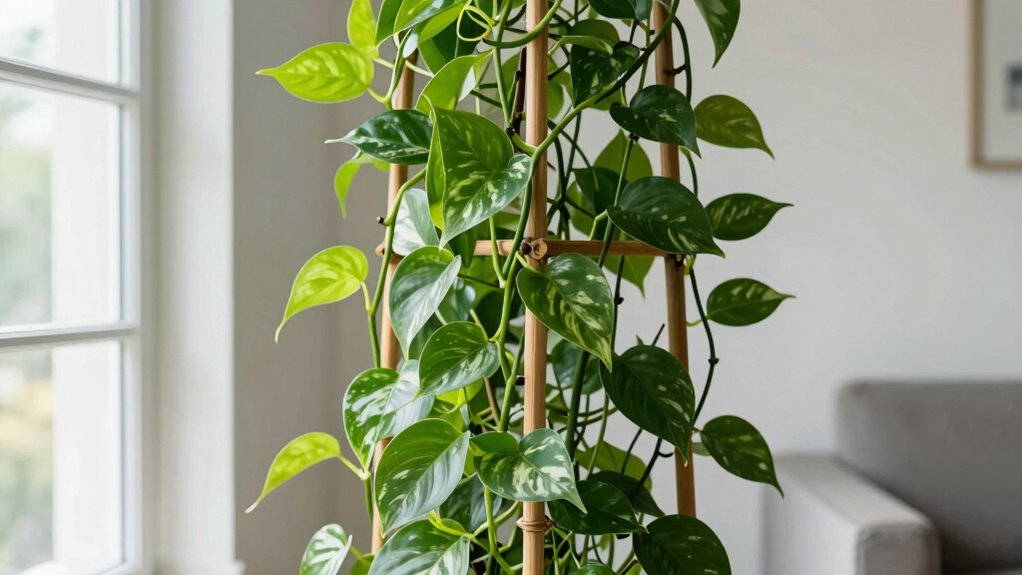
Climbing houseplants can add vibrant life and energy to your indoor spaces, but they need proper support to thrive and reach their full potential. To do this effectively, you should understand how to guide their growth and maintain their health through proper pruning techniques and fertilizer schedules. Supporting your plants isn’t just about giving them a structure to cling to; it’s about fostering a healthy environment for them to flourish.
Climbing houseplants need proper support and care to flourish and add vibrant energy to your space.
When it comes to pruning techniques, consistency is key. Regularly trim away dead or damaged leaves to keep your plant looking tidy and to prevent disease. As your plant climbs, gently guide new shoots toward your support structure, encouraging them to grow upward rather than outwards. Use clean, sharp scissors or pruning shears to avoid damaging the plant tissue. You might also pinch back overly long or unruly stems to promote bushier growth, which helps your plant fill out the space and stay balanced. Proper pruning not only shapes your plant but also stimulates new growth, making it easier for your climbing houseplant to attach to its support and thrive.
Supporting your climbing houseplant also involves understanding its nutritional needs. Fertilizer schedules play a crucial role in keeping your plant healthy and vigorous. Most indoor climbing plants benefit from a balanced, water-soluble fertilizer applied every four to six weeks during the growing season. During the dormant months, cut back on feeding but continue to monitor your plant’s health. Be cautious not to overdo it, as excess fertilizer can lead to weak, leggy growth or salt buildup in the soil. A consistent fertilizer schedule ensures your plant receives essential nutrients like nitrogen, phosphorus, and potassium, which promote strong stems and lush foliage. This, in turn, strengthens the plant’s ability to cling to and grow along its support structure.
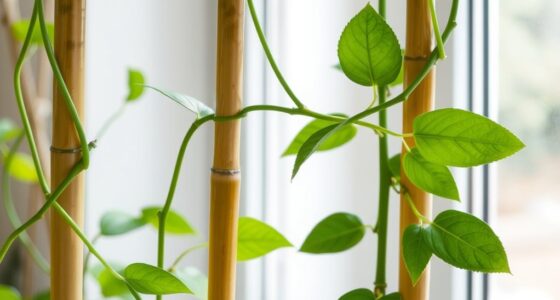
Supporting climbing houseplants also involves choosing the right support system. Trellises, moss poles, or even simple bamboo stakes can give your plant something to latch onto. As your plant grows, secure the vines gently with plant ties or clips, but avoid constricting the stems, which could damage the plant. Regularly check the ties to prevent them from cutting into the stems as your plant grows. Combining proper pruning techniques with a consistent fertilizer schedule and an appropriate support system ensures your climbing houseplant stays healthy, vigorous, and beautifully displayed. With attentive care, your indoor climbing plants will become stunning focal points, reaching their full potential while adding lush greenery and lively energy to your home.
As an affiliate, we earn on qualifying purchases.
Frequently Asked Questions
Which Climbing Houseplants Are Best for Low-Light Environments?
For low-light environments, you should choose shade-tolerant climbing plants like pothos, Philodendron, or Hoya. These indoor greenery options thrive in low light and are perfect for adding vertical interest to shaded corners. You can support their growth with simple trellises or moss poles. These climbing plants will brighten your space without needing much sunlight, making them ideal for cozy, low-light rooms where you want lush, green walls.
How Often Should I Prune Climbing Houseplants Indoors?
You should prune your climbing houseplants every 4 to 6 weeks to maintain healthy growth. Use proper pruning techniques like trimming just above a leaf node to encourage new growth and prevent legginess. Regular pruning helps with growth regulation, keeping your plants looking full and vibrant. Don’t forget to use clean, sharp tools to avoid disease. Adjust your pruning frequency based on how fast your plant grows and its overall health.
What Are Common Pests That Affect Indoor Climbing Plants?
You might worry about pests damaging your climbing houseplants, but with proper pest identification and natural remedies, you can keep them healthy. Common pests include spider mites, aphids, and mealybugs. Regularly inspect your plants, and use neem oil or insecticidal soap for natural control. Swift action prevents infestations from spreading, ensuring your climbing plants thrive indoors without harsh chemicals.
How Can I Prevent My Climbing Plant From Becoming Root-Bound?
To prevent your climbing plant from becoming root-bound, regularly check its root space and grow it in an appropriately sized container. When you notice roots circling the pot’s edges, it’s time to repot into a larger container. This gives the roots room to spread, promotes healthy growth, and prevents the plant from becoming cramped. Repotting every couple of years guarantees your climbing plant stays vigorous and well-supported.
Are There Specific Fertilizers Recommended for Indoor Climbing Plants?
You should use balanced, water-soluble fertilizers formulated for indoor plants to meet your climbing plant’s nutrition needs. Look for fertilizer types with equal parts nitrogen, phosphorus, and potassium (like 20-20-20), or consider liquid or slow-release options. Regular feeding encourages healthy growth, vibrant leaves, and strong vines. Remember, consistent fertilization supports plant nutrition, boosts resilience, and keeps your climbing houseplant thriving indoors all year round.
As an affiliate, we earn on qualifying purchases.
Conclusion
Supporting your climbing houseplants indoors is like giving them a sturdy dance partner—they thrive and sway beautifully when guided properly. With the right stakes, trellises, or moss poles, you help them reach their full potential while adding a lush, vibrant touch to your space. Just be gentle and attentive, and your plants will climb happily, turning your home into a green paradise. Keep nurturing, and watch your indoor garden flourish like a well-choreographed performance.
plant support clips for climbing plants
As an affiliate, we earn on qualifying purchases.
As an affiliate, we earn on qualifying purchases.
As an affiliate, we earn on qualifying purchases.
Fall Picks
fall essentials
As an affiliate, we earn on qualifying purchases.