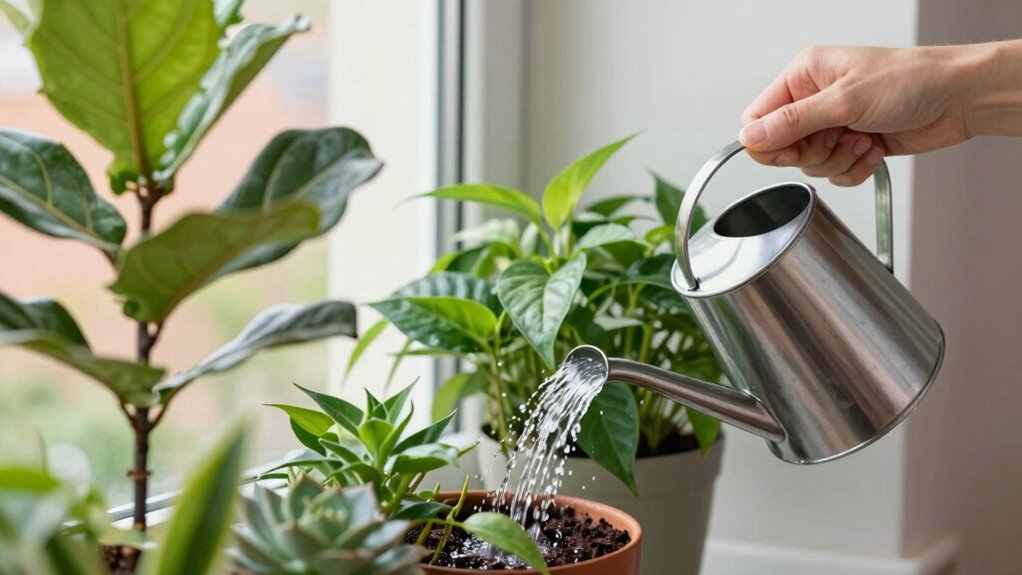
To water indoor plants consistently all year, observe their specific needs based on soil drainage and sunlight exposure. Adjust your routine seasonally—watering more in sunny months and less during darker times. Check soil moisture regularly by feeling the top inch, avoiding over- or under-watering. Use reminders or a gardening journal to stay on track and develop an intuitive sense of each plant’s signals. Keep these tips in mind, and you’ll maintain healthy, thriving plants year-round.
Key Takeaways
- Observe each plant’s specific needs based on soil moisture, sunlight, and seasonality to tailor watering routines.
- Maintain a consistent watering schedule while adjusting for seasonal changes and plant signals.
- Use a moisture meter or finger test to accurately gauge soil dryness before watering.
- Ensure proper soil drainage and utilize well-draining soil mixes to prevent overwatering.
- Keep a gardening journal or set reminders to track watering days and plant responses throughout the year.

Watering indoor plants consistently throughout the year can be challenging, but establishing a routine helps guarantee they stay healthy and vibrant. The key to successful watering is understanding your plants’ specific needs, which depend heavily on factors like soil drainage and sunlight exposure. When you pay attention to these elements, you can create a watering schedule that keeps your plants thriving without overwatering or letting them dry out.
Start by evaluating your plants’ soil drainage. Well-draining soil prevents excess water from pooling around the roots, reducing the risk of root rot. If the soil retains too much water, you might notice your plants wilting or developing yellow leaves. To improve drainage, use a pot with drainage holes and incorporate materials like perlite or coarse sand into your soil mix. When watering, check the soil moisture by inserting your finger about an inch deep; if it feels dry, it’s time to water. If it’s still moist, wait a few more days. This simple step helps prevent overwatering, especially during winter months when growth slows down.
Check soil moisture with your finger to prevent overwatering and improve drainage with proper pot and soil mix.
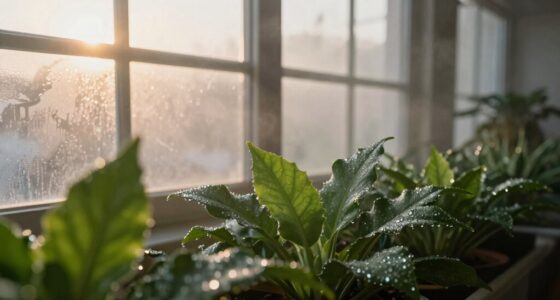
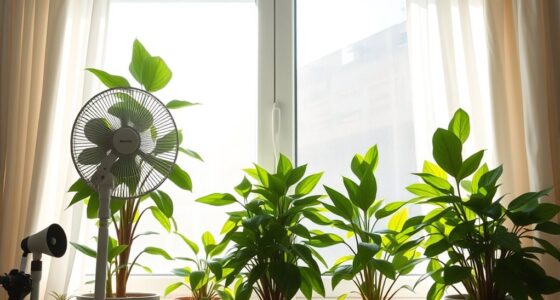
Sunlight exposure also influences how often you should water your indoor plants. Plants that receive plenty of direct sunlight tend to dry out faster because the sun accelerates evaporation from the soil and transpiration through the leaves. Conversely, plants in low-light spots retain moisture longer. Pay attention to where your plants are placed. If they sit in a bright, sunny window, you might need to water more frequently, perhaps every few days. For those in shadier spots, watering once a week or even less may suffice. Adjust your routine based on the season, as sunlight intensity and duration change throughout the year, affecting soil moisture levels.
Consistency doesn’t mean sticking to a rigid timetable regardless of conditions. Instead, it involves observing your plants and recognizing their signals. Keep a gardening journal or use reminders to track watering days, noting how your plants respond. Over time, you’ll develop an intuitive sense of when each plant needs water, based on soil drainage and sunlight exposure. Additionally, understanding soil moisture levels can help you better tailor your watering routine to keep your indoor plants healthy and thriving year-round. Remember, watering too often can drown roots, while too little causes dehydration. Striking this balance is essential for maintaining healthy, vibrant indoor plants year-round.

XLUX Long Probe Deep Use Soil Moisture Meter, Water Monitor Indicator Sensor, Hygrometer for Outdoor Indoor Large Pot Plants, Flower, Gardening, Farming
Accurate Soil Moisture Detection: The XLUX Soil Moisture Meter can tell you if the soil deep inside your…
As an affiliate, we earn on qualifying purchases.
As an affiliate, we earn on qualifying purchases.
Frequently Asked Questions
What Are Signs of Overwatering Indoor Plants?
You’ll notice overwatering when soil drainage is poor, and excess water lingers around the roots. Signs include yellowing leaves, wilting despite wet soil, and a musty smell indicating root rot. You may also see mold or fungus on the soil surface. To prevent this, guarantee proper drainage, water only when the top inch of soil feels dry, and avoid letting your plant sit in water.
How Does Humidity Affect Indoor Plant Watering Needs?
Humidity levels can dramatically influence your indoor plants’ watering needs, almost like turning a dial from drought to flood. Higher humidity means your plants lose less water through evaporation, so you’ll need to water less frequently. Conversely, lower humidity speeds up drying, requiring more regular watering. Adjust your watering techniques accordingly, checking soil moisture often to prevent over- or underwatering, ensuring your plants stay healthy no matter the season.
Can Watering Schedules Be Automated Effectively?
Yes, watering schedules can be automated effectively using tools like watering timers and moisture sensors. You set the timers to deliver water at specific intervals, while moisture sensors monitor soil moisture levels and trigger watering only when needed. This combination guarantees your indoor plants receive consistent care year-round, preventing overwatering or underwatering. Automation simplifies plant maintenance, saves time, and helps maintain healthy, thriving plants regardless of humidity or seasonal changes.
How Do Seasonal Changes Influence Watering Frequency?
Think of your plants’ watering routine as a dance, shifting with the seasons. In warmer months, they need more water, so you’ll increase your watering frequency during spring and summer. When fall and winter arrive, reduce it, giving your plants a chance to rest. Seasonal adjustments are key—they keep your watering routine in harmony with nature’s rhythm, ensuring your indoor garden stays healthy and thriving all year long.
Are There Eco-Friendly Watering Options for Indoor Plants?
Yes, there are eco-friendly watering options for indoor plants. You can use sustainable hydration methods like rainwater harvesting or filtered tap water to reduce plastic waste and chemical runoff. Reusable watering cans made from recycled materials also support eco-friendly practices. Additionally, self-watering planters help conserve water by providing consistent moisture, promoting sustainable hydration, and reducing waste. These options help you care for your plants while minimizing your environmental impact.
well-draining indoor plant soil mix
As an affiliate, we earn on qualifying purchases.
As an affiliate, we earn on qualifying purchases.
Conclusion
Consistent watering is like nurturing a delicate dance, where each step keeps your indoor garden thriving through all seasons. Imagine a lush, green oasis thriving in the winter’s chill, just as vibrant as in summer’s warmth. With steady habits, your plants won’t just survive—they’ll flourish, turning your home into a lush sanctuary. Remember, the secret isn’t in perfection, but in the gentle rhythm of care you maintain year-round. Keep watering, and watch your indoor jungle thrive.
indoor plant watering reminder system
As an affiliate, we earn on qualifying purchases.
As an affiliate, we earn on qualifying purchases.
plant care journal for indoor plants
As an affiliate, we earn on qualifying purchases.
As an affiliate, we earn on qualifying purchases.