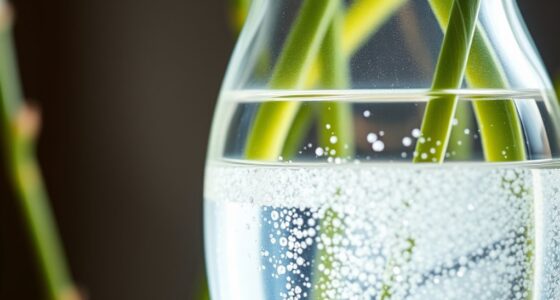
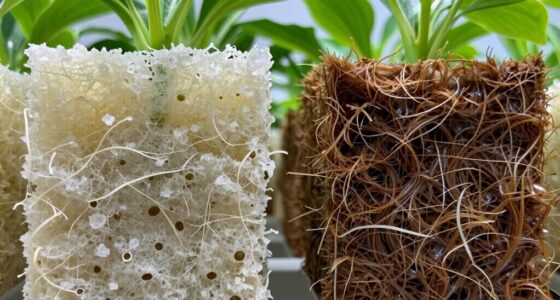
To properly flush your hydroponic system, turn off the nutrient supply and drain as much old solution as possible. Fill the system with clean, pH-balanced water and run it for 15-30 minutes to loosen salts and minerals. Use gentle cleaning agents if needed, then rinse thoroughly. Afterward, drain completely, inspect for debris, and refill with fresh nutrients. Following these steps helps prevent buildup and keeps your system healthy—discover more tips to master the process.
Key Takeaways
- Turn off nutrient supply and drain existing solution completely before starting the flush.
- Use clean, pH-balanced water, circulating it for 15-30 minutes to reach all system parts.
- Incorporate gentle cleaning agents if stubborn deposits or algae are present, then rinse thoroughly.
- Drain the flushed water, inspect and clean system surfaces, then refill with fresh, nutrient-balanced water.
- Maintain a regular flushing schedule and proper air circulation to prevent buildup and ensure system health.
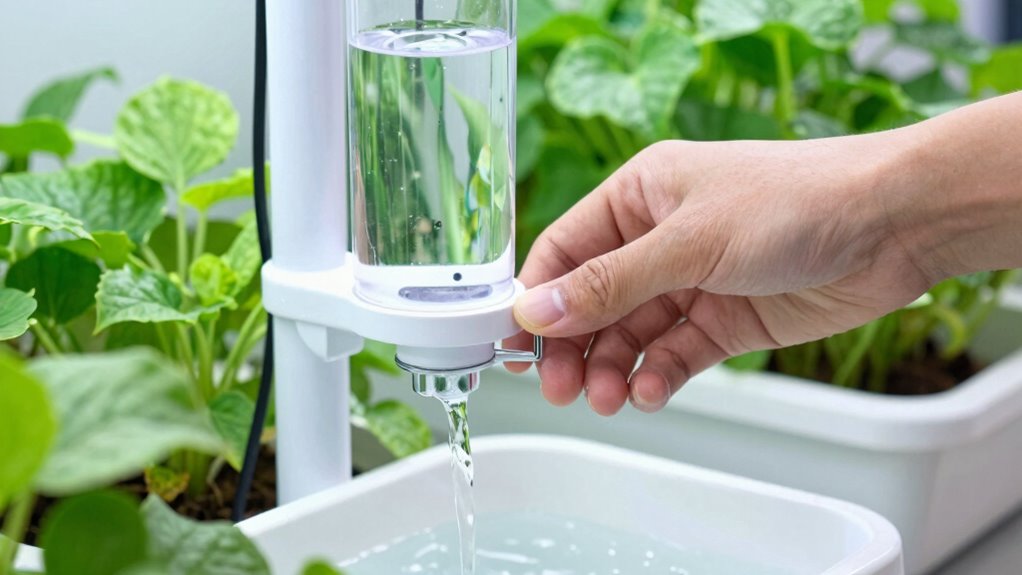
Flushing a hydroponic system is an essential maintenance step to guarantee your plants stay healthy and productive. Over time, nutrient imbalances can develop if leftover salts and minerals accumulate, which can hinder nutrient uptake and stunt growth. Regular flushing helps reset your system, preventing these imbalances from harming your plants. Additionally, it reduces the risk of system contamination, which can occur when bacteria, fungi, or algae take hold in stagnant or nutrient-rich water. Contamination not only compromises plant health but can also spread to other areas of your setup, making proper flushing a crucial part of ongoing maintenance.
Regular flushing prevents nutrient imbalances and contamination, ensuring healthy, productive hydroponic plants.
To begin, you want to prepare clean, pH-balanced water. Use purified or filtered water if possible, as tap water often contains minerals or chemicals that could introduce new imbalances. Before starting the flush, turn off your nutrient supply and drain as much of the existing solution as possible. This initial step clears out most of the stale nutrients, but residual buildup may remain, which is why a thorough rinse is necessary. Fill your system with the prepared water, making sure to circulate it through all channels and grow trays. This process will help loosen and wash away any accumulated salts or mineral deposits that could cause nutrient imbalance. Understanding the importance of a balanced nutrient solution can further optimize your flushing routine. Incorporating proper nutrient management practices into your regimen can also contribute to healthier plant growth.
Furthermore, ensuring proper air circulation during the process can help prevent the growth of unwanted microorganisms, contributing to a healthier system overall.
Next, run the system for about 15 to 30 minutes, ensuring the water reaches all parts of the setup. During this time, the water will carry away unwanted residues and contaminants. If your system has any stubborn deposits or algae buildup, you might consider adding a gentle cleaning agent designed for hydroponic systems—just be sure to rinse thoroughly afterward to remove any residues. Additionally, understanding the importance of a high contrast ratio in your system’s design can help you better identify and address areas where buildup may be more prevalent. After completing the flush cycle, drain the water completely and inspect your system for any remaining debris or buildup. Wipe down surfaces if necessary to prevent future contamination.
Once your system is clean and free of old nutrients, refill it with fresh, nutrient-balanced water tailored to your plants’ stage of growth. Regular flushing not only prevents nutrient imbalance but also keeps your system sterile, reducing the chance of pathogens taking hold. Remember, consistent maintenance, including periodic flushing, is key to keeping your hydroponic system in peak condition. By staying proactive with these steps, you’ll ensure your plants thrive, grow strong, and produce healthy yields without interruption.

Aunifun Hydroponics Grower Kit DIY Self Watering Indoor Hydroponics Tools Hydroponic System Planting Container Include Aquarium Air Pump Buoy Planting Box
Color and Material: the hydroponics planting container is gray.It is made of high quality evironmentally PVC-U,exquisite and durable….
As an affiliate, we earn on qualifying purchases.
As an affiliate, we earn on qualifying purchases.
Frequently Asked Questions
How Often Should I Flush My Hydroponic System?
You should flush your hydroponic system every 2-4 weeks, depending on nutrient balance and pH levels. Regular flushing helps remove salt buildup and prevents imbalances that could harm your plants. During each flush, you’re adjusting pH levels to ideal ranges and ensuring nutrients are properly balanced. Consistent flushing maintains healthy roots, promotes better growth, and keeps your system clean, ultimately boosting your crop yield.
Can I Use Tap Water for Flushing?
Using tap water for flushing is like cleaning a window with muddy water—you might remove surface dirt but leave behind residues. Water quality is essential for system maintenance, as tap water can contain minerals or chlorine that harm plants. It’s better to use dechlorinated or filtered water, ensuring your hydroponic system stays clean and healthy, preventing build-up and promoting ideal plant growth.
What Cleaning Agents Are Safe for Hydroponic Systems?
You should use safe cleaning solutions like diluted hydrogen peroxide or vinegar for regular cleaning. Organic disinfectants, such as neem oil or essential oils, are also effective and eco-friendly options. Avoid harsh chemicals that could harm your plants or contaminate your system. Always guarantee your cleaning agents are thoroughly rinsed out before restarting your hydroponic system to prevent any residual chemicals from affecting plant growth.
How Do I Prevent Algae Growth During Flushing?
To prevent algae growth during flushing, you should focus on algae prevention by ensuring your system is clean and free of light exposure. Proper flush timing is essential; do it when nutrient levels are low and before algae can establish. Keep the system covered or dark during and after flushing to block light. Regular maintenance and monitoring will also help minimize algae buildup and maintain a healthy hydroponic environment.
Is Flushing Necessary for All Types of Hydroponic Systems?
Not all hydroponic systems require flushing, but many benefit from it to guarantee nutrient cycling and system sterilization. If you’re growing continuously, flushing helps prevent nutrient buildup and algae growth. For systems like NFT or drip, regular flushing keeps water clean and roots healthy. However, deep cleaning might not be necessary for sealed or recirculating setups. Assess your system’s needs to determine when flushing is crucial for peak growth.

General Hydroponics Ph Control Kit
General Hydroponics pH Control Kit contains everything you need to measure pH levels of your hydroponic grow reservoirs
As an affiliate, we earn on qualifying purchases.
As an affiliate, we earn on qualifying purchases.
Conclusion
Flushing your hydroponic system regularly is essential for healthy plant growth and maximizing yields. By following the proper steps, you guarantee your system stays clean and free of harmful buildup. Did you know that neglecting system flushing can lead to nutrient imbalances and a 20% decrease in crop productivity? Staying diligent with your flushing routine keeps your plants thriving and your harvests bountiful. So, make it a habit and enjoy the best results from your hydroponic setup!
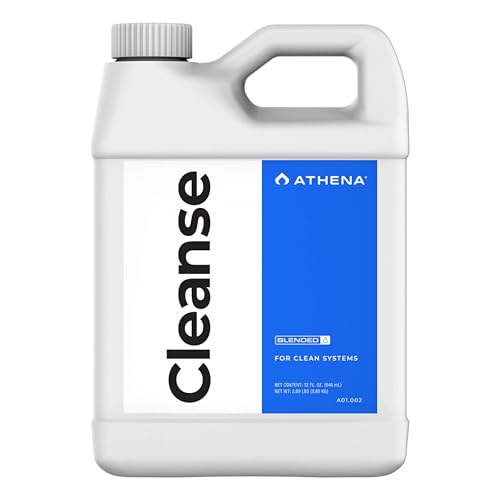
Athena Blended Cleanse | Plant-Safe System Cleaner for Hydroponics | Descaler Solution & Irrigation Line Cleaner | 32 Oz
Plant-Safe Descaling Solution for All Growth Stages: Non-toxic cleaning formula safe to use during vegetative or flowering phases…
As an affiliate, we earn on qualifying purchases.
As an affiliate, we earn on qualifying purchases.

Liquid Plant Food for use in AeroGarden, IDOO and Hydroponic Growing Systems, Liquid Fertilizer 8 oz (250mL)
Made for AeroGarden Systems – Formulated to support plant growth in AeroGarden and similar units.
As an affiliate, we earn on qualifying purchases.
As an affiliate, we earn on qualifying purchases.