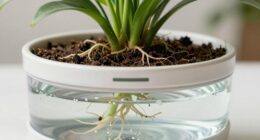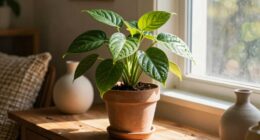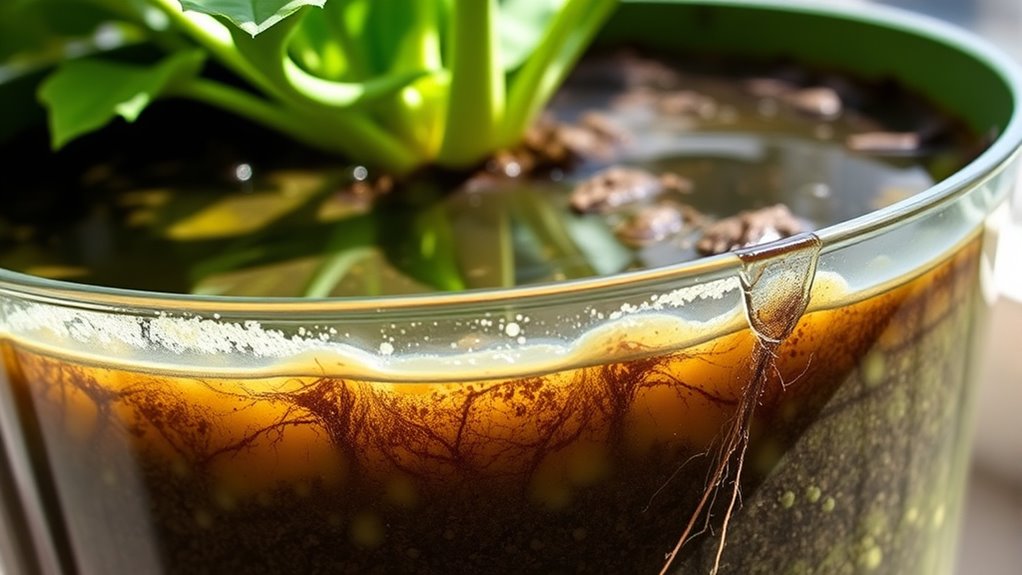
If you suspect overwatering in your self-watering planter, start by inspecting the soil and roots for signs of rot, like mushiness or discoloration. guarantee the reservoir isn’t holding too much water, and check that the wick and drainage system aren’t clogged or blocked by debris. Adjust watering habits to keep the soil slightly drier and clean the planter regularly. For more helpful tips on fixing your planter’s issues, keep exploring ways to improve drainage and maintenance.
Key Takeaways
- Inspect the planter for signs of overwatering, such as yellow leaves or mushy roots, and identify potential drainage issues.
- Clean out debris, algae, or mineral buildup blocking drainage channels and ensure the wick and reservoir are free of obstructions.
- Check soil moisture levels regularly, replace or amend with well-draining soil, and loosen compacted soil to improve drainage.
- Elevate the planter on a drainage-friendly surface and use a saucer to prevent waterlogging and facilitate proper water flow.
- Adjust watering habits by refilling the reservoir only when necessary and keeping soil slightly drier to prevent overwatering.
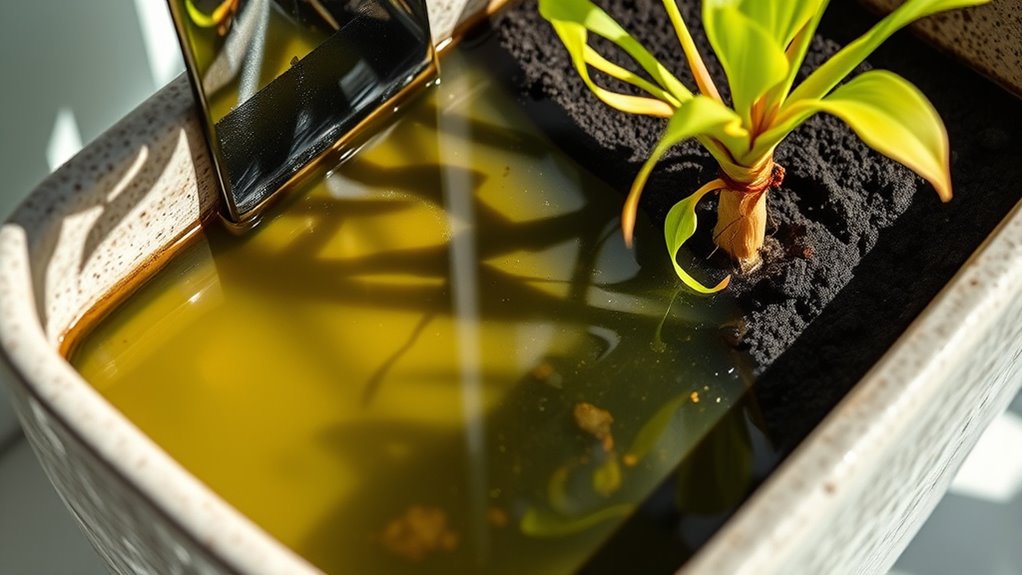
Overwatering is a common mistake that can harm your plants if not addressed promptly. When your self-watering planter retains too much water, it can lead to drainage issues that threaten your plant’s health. These drainage problems often result from a clogged wick, a poorly designed reservoir, or debris blocking the flow of water. If you notice your plant’s leaves turning yellow, wilting despite moist soil, or roots appearing brown and mushy, these are clear plant health symptoms of overwatering. Addressing these signs quickly can save your plant from root rot and other serious issues.
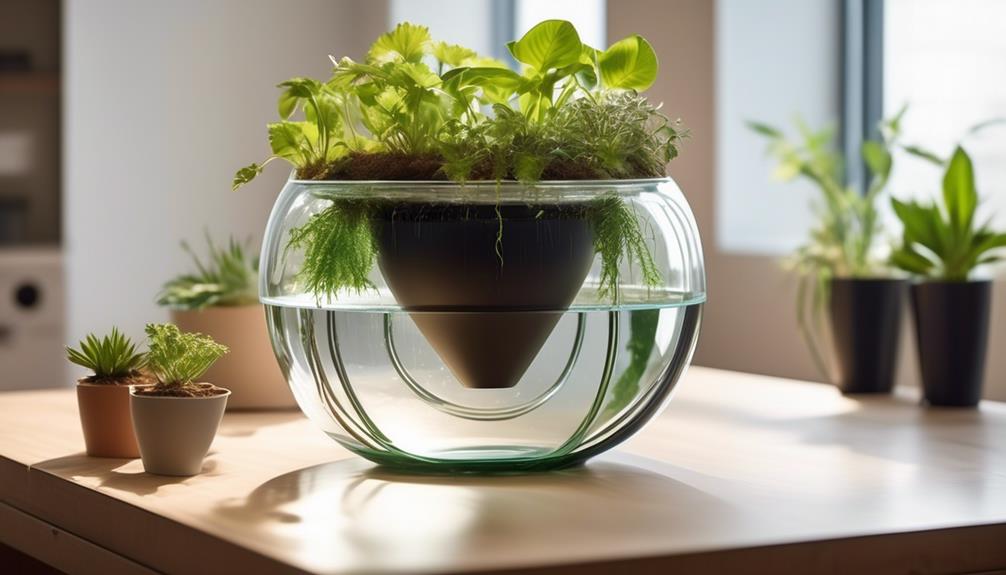
The first step is to understand that self-watering planters are designed to provide a consistent water supply, but they aren’t immune to drainage issues. If excess water isn’t draining properly, it can lead to waterlogged soil, depriving roots of oxygen and creating a perfect environment for fungal growth. Check the planter’s reservoir and wick system; sometimes, debris, algae, or mineral deposits can clog the channels and block water flow. You might need to remove the planter from its stand, drain excess water, and clean the components thoroughly. Use a gentle brush or rinse with water to clear any buildup that could impede drainage.
Next, examine the soil inside the planter. Over time, soil can compact or develop a crust that prevents proper water absorption or drainage. If the soil feels overly saturated and water pools on the surface, it’s time to replace or amend it. Loosen the soil and add a well-draining potting mix that allows excess water to escape easily. This will help prevent future drainage issues and improve overall plant health.
Another common cause of drainage problems is improper placement of the self-watering planter. Ensure it’s sitting on a surface that allows for proper drainage and isn’t obstructed. If it’s placed on a solid surface like concrete, excess water may have nowhere to go, leading to saturation. Elevate the planter slightly or place it on a saucer with drainage holes to facilitate free flow of excess water.
Finally, monitor your watering schedule. Even in self-watering planters, overwatering can occur if you fill the reservoir too often or too much. Check the water level regularly and only refill when it’s low. Remember, plants generally prefer to be kept slightly on the drier side rather than constantly wet. Additionally, practicing proper watering techniques can help prevent drainage issues and promote healthier, more resilient plants.

GroBucket Self Watering Planter Insert w/LifeTested Technology, Water Reservoir & Level Indicator – Turn Any 5-Gal Bucket into a DIY, Portable Automatic Container Indoor-Outdoor Garden, 3-Pack
- Convert 5-Gallon Bucket: Turns any 5-gallon bucket into a self-watering planter
- Built-In Water Reservoir: Includes a 1-gallon water reservoir with refill indicator
- Healthy Root Growth: Ensures steady moisture, airflow, and easy refilling
As an affiliate, we earn on qualifying purchases.
As an affiliate, we earn on qualifying purchases.
Frequently Asked Questions
How Can I Prevent Overwatering in Self-Watering Planters?
To prevent overwatering in self-watering planters, you should maintain the correct moisture balance by checking the water level regularly. Guarantee your plants are planted at the proper depth to avoid excess moisture around their roots. Use your finger to test soil moisture before watering, and don’t let the water reservoir run empty or stay full too long. Adjust your watering schedule based on the plant’s needs and environmental conditions.
What Signs Indicate Overwatering in My Plants?
Your plants scream for help when you see yellow leaves and mold growth, signaling overwatering. You might notice soggy soil that never dries out or a foul smell, too. These signs indicate excess moisture that drowns roots and invites mold. To prevent this, check your planter’s water level regularly, guarantee proper drainage, and avoid watering on a strict schedule. Acting early keeps your plants healthy and vibrant.
Can Overwatering Damage Plant Roots Over Time?
Yes, overwatering can damage your plant roots over time. It causes root rot, which weakens roots and hampers nutrient absorption. Additionally, excess water creates oxygen deficiency around the roots, suffocating them and promoting fungal growth. This damage can stunt your plant’s growth and even kill it if untreated. To prevent this, make certain proper watering practices and that your self-watering planter has good drainage.
Are Certain Plant Types More Prone to Overwatering Issues?
Ever wondered if some plants are more prone to overwatering? Yes, certain plants have higher susceptibility due to their roots and natural watering needs. Succulents and cacti, for example, require less frequent watering, so overwatering can quickly harm them. Your plant’s susceptibility depends on its type, and adjusting watering frequency accordingly helps prevent issues. Know your plant’s specific needs to keep it healthy and thriving.
How Often Should I Check Water Levels in Self-Watering Planters?
You should check the water levels in your self-watering planter at least once a week. During this moisture monitoring, look for signs of over- or under-watering, and adjust your watering schedule accordingly. Keep an eye on the water level indicator if your planter has one. Regular checks help guarantee your plants receive the right amount of water, preventing issues like overwatering or drought stress.

Craft Organic Houseplant Potting Mix, Elite House Plant Soil, Chunky, Well Draining Potting Soil for All Indoor Plants, Tropical Plants & Flowers, Sustainable & Peat Free, Less Prone to Gnats, 2QT
- Complete Indoor Potting Soil: Supports healthy root development and airflow
- Pre-Moistened to Reduce Shock: Settles roots quickly, minimizes transplant stress
- Enriched with Organic Worm Castings: Promotes vibrant, lush foliage growth
As an affiliate, we earn on qualifying purchases.
As an affiliate, we earn on qualifying purchases.
Conclusion
Remember, even the most delicate plants sometimes prefer a gentle pause in their watering routine. By paying close attention and adjusting your watering habits, you can help your plants thrive without risking their comfort. A little patience and observation go a long way in nurturing healthy growth. Trust your instincts, and soon you’ll find the perfect balance that keeps your plants happy and vibrant—like a secret garden just waiting to bloom.

ORIMERC 60 feet 1/6 inch Wicking Rope for Plants, Self Watering Wick Cord for Vacation, Plant Water Wicks for Self-Watering Planter Pot DIY Automatic Watering Device System
- Length of Wicking Rope: 60 feet long for versatile use
- Material Composition: 100% polyester, safe and chemical-free
- Durability: Resistant to rot and decay for long-term use
As an affiliate, we earn on qualifying purchases.
As an affiliate, we earn on qualifying purchases.

FUIJOL 4/5/6/7 Inch Clear Nursery Pots for Plants with Sacuers 20 Pack, Plastic Flower Pots with Drainage Holes, Variety Pack Seedlings Garden Pot for Indoor Outdoor (4+5+6+7 inch)
- Complete Planting Kit: 20 pots in four sizes for various plants
- Includes Matching Saucers: Each pot comes with a tray to catch excess water
- Drainage Holes Design: Ensures proper aeration and prevents root rot
As an affiliate, we earn on qualifying purchases.
As an affiliate, we earn on qualifying purchases.