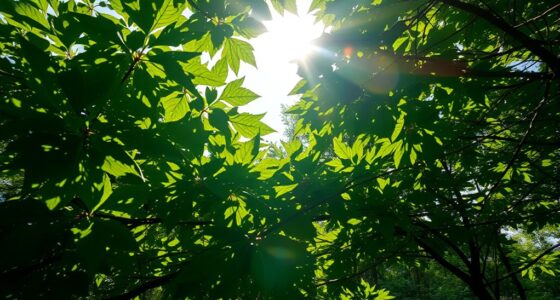
Plants are green because they contain chlorophyll, the pigment that absorbs sunlight for photosynthesis. Chlorophyll mainly absorbs red and blue light, reflecting green light back to your eyes. This vibrant green helps plants capture energy from sunlight efficiently, supporting their growth and producing oxygen. When conditions change, chlorophyll breaks down, revealing other pigments and changing leaf colors. Want to discover more about how leaf pigments influence plants’ lifecycles and colors?
Key Takeaways
- Plants are green because chlorophyll reflects green light and absorbs red and blue wavelengths for photosynthesis.
- Chlorophyll’s role in capturing sunlight enables plants to produce energy and sustain growth.
- The green pigment dominates during active growth, giving leaves their characteristic color.
- Seasonal changes cause chlorophyll to degrade, revealing other pigments and changing leaf color.
- The green color helps plants efficiently absorb necessary light while reflecting excess, aiding environmental adaptation.

Plants are undeniably green because of chlorophyll, the pigment that enables them to capture sunlight for photosynthesis. This pigment plays a pivotal role in how leaves absorb light energy and convert it into chemical energy, fueling plant growth and survival. When sunlight hits a leaf, chlorophyll absorbs specific wavelengths—mainly red and blue light—while reflecting green. That reflected green light is what gives plants their characteristic color, making them stand out in the landscape. But chlorophyll’s function isn’t just about color; it’s fundamental to the leaf coloration processes that sustain life on Earth.
Chlorophyll’s primary role is to facilitate photosynthesis. It captures light energy and excites electrons, which then drive a series of chemical reactions that produce glucose and oxygen. This process supports not only the plant but also the entire food chain, as plants form the base of most ecosystems. The leaf coloration processes are tightly linked to chlorophyll’s activity. When a plant is actively photosynthesizing, chlorophyll levels are high, and the leaf appears vibrant green. As seasons change or under stress, chlorophyll degrades, revealing other pigments like carotenoids and anthocyanins that lead to yellow, orange, or red hues. This shift in pigmentation is part of the leaf coloration process, signaling the plant’s preparation for dormancy or response to environmental cues.
Understanding the chlorophyll function helps explain why leaves remain green during the growing season and why they change color in autumn. In the fall, shorter days and cooler temperatures trigger the breakdown of chlorophyll, reducing green pigmentation. As chlorophyll diminishes, underlying pigments become visible, creating the vivid fall foliage we admire. This process is not only a visual spectacle but also a sign of the plant reallocating resources. The leaf coloration processes are nature’s way of protecting the plant and preparing it for winter, conserving nutrients in the process.
In essence, the reason plants are green ties directly to chlorophyll’s function in energy capture and the leaf coloration processes that respond to environmental conditions. The vibrant green color results from the reflection of green light, a byproduct of chlorophyll’s absorption of other wavelengths. By understanding this, you see that the green hue isn’t just about aesthetics—it’s an essential part of how plants sustain themselves and adapt to their surroundings. Chlorophyll, consequently, isn’t merely a pigment; it’s the core of plant life and the reason for their lush, verdant appearance. This process is also influenced by environmental factors such as light and temperature, which can accelerate or slow down chlorophyll degradation.

Chlorophyll Spray for Plants, 1PCS Liquid Chlorophyll Universal Whole Plant Nutrient Solution for The Healthy Growth of Flowers, Trees, Green Plants and Green Leaves – 100ML/3.38FL.OZ
Our chlorophyll spray contains nitrogen compounds and vitamin K1. It can effectively alleviate and prevent the problem of…
As an affiliate, we earn on qualifying purchases.
As an affiliate, we earn on qualifying purchases.
Frequently Asked Questions
Do All Plants Have the Same Type of Chlorophyll?
Not all plants have the same type of chlorophyll. You’ll find chlorophyll variants like chlorophyll a and b, which vary slightly in their pigment structure. This pigment diversity allows different plants to adapt to various environments and light conditions. By having diverse pigments, plants can maximize photosynthesis efficiency. So, while most plants contain these chlorophyll variants, some may have unique pigments that give them different colors or help them thrive in specific habitats.
How Do Leaf Pigments Change During Seasons?
During seasons, leaf pigments undergo seasonal pigment shifts due to environmental influence. You’ll notice that in fall, chlorophyll breaks down, revealing carotenoids and anthocyanins, which give leaves vibrant colors. In winter, some plants shed leaves or produce different pigments to protect against cold. These changes help plants adapt to varying light, temperature, and moisture conditions, showcasing nature’s dynamic way of managing seasonal shifts in their environment.
Can Plants Be Green Without Chlorophyll?
Plants can be green without chlorophyll, but it’s rare. You see, pigment diversity drives leaf coloration, creating vibrant reds, yellows, and purples from anthocyanins and carotenoids. These pigments sometimes dominate when chlorophyll degrades, revealing hidden hues. While chlorophyll is the primary pigment for green, some plants rely on alternative pigments for coloration, showcasing nature’s diversity. So yes, plants can appear green through other pigments under specific circumstances.
Why Are Some Plants Green and Others Different Colors?
Some plants are green because chlorophyll dominates their leaves, efficiently absorbing light for photosynthesis. Other plants display different colors due to pigments like carotenoids and anthocyanins, which absorb different wavelengths of light. You’ll notice this variation because these pigments influence the photosynthesis process, allowing plants to adapt to their environments. So, the color difference results from the specific pigments present, affecting how they absorb light and carry out photosynthesis.
How Does Leaf Color Affect Photosynthesis Efficiency?
Leaf color directly impacts light absorption and photosynthesis efficiency. Green leaves, rich in chlorophyll, absorb red and blue light effectively, maximizing energy capture. However, if leaves turn yellow or other colors, they absorb less light, reducing photosynthesis efficiency. Different pigments can help plants adapt to various light conditions, but generally, green leaves optimize light absorption for the best photosynthesis output, ensuring healthy growth.

Sunset Drift(EBL) for Nissan Touch Up Paint Pen, 2 in 1 Car Scratch Remover with Pen Tip and Brush, Precise Color Match for Car Paint Scratch Repair, Quickly and Easily Fix Chips and Nicks
【Exact Color Matched for Nissan】Specifically designed for Nissan vehicles. Sunset Drift(EBL) can be well color matched for Rogue/Altima/Leaf/Murano/Maxima….
As an affiliate, we earn on qualifying purchases.
As an affiliate, we earn on qualifying purchases.
Conclusion
So, next time you marvel at a lush, green leaf, remember it’s not just a pretty color—it’s nature’s vibrant shield, capturing sunlight like a tiny solar panel. Those green pigments, chlorophyll, turn leaves into miniature factories, fueling life on Earth. Like a painter’s brushstroke, their green hue paints the landscape with vitality. You see, it’s this simple yet powerful pigment that keeps the world alive, reminding us how beauty and science intertwine in every leaf’s glow.

Aokrean Plant Grow Light, 48 LEDs Full Spectrum Grow Lights for Indoor Plants, Height Adjustable Small Halo Grow Light with Base, 3 Optional Spectrums, Auto Timer 3/9/12Hrs, 10 Brightness, 3 Pack
NOTE: The product stand needs to be pressed down by the flower pot to be stable. Not wireless…
As an affiliate, we earn on qualifying purchases.
As an affiliate, we earn on qualifying purchases.

Autumn Leaves: A Guide to the Fall Colors of the Northwoods
As an affiliate, we earn on qualifying purchases.
As an affiliate, we earn on qualifying purchases.